NATO's 2.5% Defense Spending: Redefining US Transatlantic Diplomacy?
NATO's new 2.5% defense spending threshold is poised to significantly redefine US transatlantic diplomacy by 2026, influencing burden-sharing, strategic priorities, and the overall cohesion of the alliance amidst evolving global security challenges.
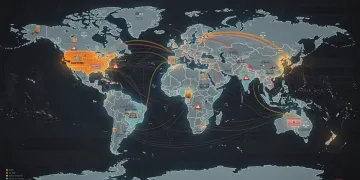
OFAC Sanctions: A 4-Step Overview of US Strategic Restrictions
This article provides a comprehensive 4-step overview of navigating revised OFAC diplomatic sanctions, detailing US strategic restrictions across key geopolitical corridors to enhance understanding and compliance for businesses and individuals.
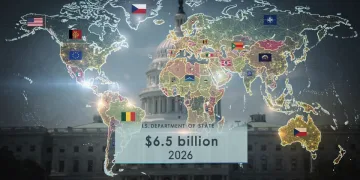
State Department's 2026 Security Aid: $6.5 Billion Shift Impact
The State Department's 2026 security assistance strategy marks a pivotal shift, reallocating $6.5 billion in foreign military aid to address evolving global threats and optimize support for key strategic partners.
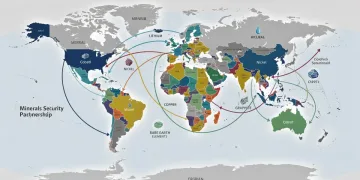
Minerals Security Partnership: US Supply Chain Diplomacy 2026
The Minerals Security Partnership (MSP) represents the United States' strategic 2026 diplomatic initiative to bolster critical mineral supply chains, collaborating with 14 global allies to ensure economic stability and technological advancement.
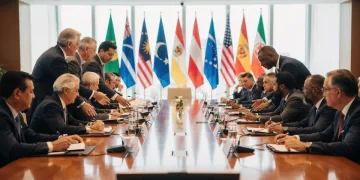
2026 Indo-Pacific Economic Framework: Reshaping US Alliances
The 2026 Indo-Pacific Economic Framework (IPEF) update significantly reshapes US strategic alliances across 14 partner nations by enhancing cooperation on trade, supply chains, clean energy, and fair economy practices, fostering a more resilient and integrated regional economy.

New Asia Trade Agreement: Impact on US National Security
The implications of the new trade agreement with Asia for US national security interests involve complex dynamics, including economic interdependence, geopolitical competition, and potential shifts in regional power balances, all of which could significantly impact America’s strategic positioning. The signing of a new trade agreement with Asia has sparked considerable debate regarding its potential impact […]

How a 5% Defense Spending Hike Will Reshape US Mideast Policy
How Will the Projected 5% Increase in Defense Spending Impact US Foreign Policy in the Middle East in 2025? It could lead to increased military presence, strengthened alliances with regional partners, and potentially more assertive intervention in ongoing conflicts, while also influencing diplomatic efforts and arms sales policies. What will a bigger defense budget mean […]

Analyzing the Impact: A 10% Cut in US Aid to Africa
Analyzing the potential consequences of a 10% reduction in foreign aid to Africa from a U.S. foreign policy perspective involves assessing economic, political, and humanitarian impacts, considering alternative aid strategies, and understanding the shifting dynamics of international relations. The United States’ foreign aid to Africa has long been a focal point of both support and […]
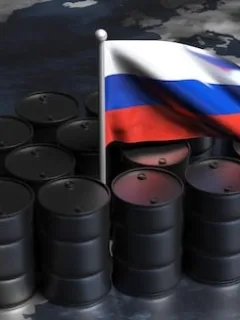
US Foreign Policy & Russia Sanctions: Impact on Global Energy
The recent shift in US foreign policy, marked by new sanctions on Russia, is poised to significantly impact global energy markets, potentially leading to price volatility, supply chain disruptions, and altered geopolitical dynamics. The United States’ foreign policy has taken a notable turn with the implementation of new sanctions targeting Russia. The reverberations of these […]

Decoding US Climate Change Policy: Impact of International Agreements
Decoding the US Stance on Climate Change: What Does the Latest International Agreement Mean for American Diplomacy? involves examining how recent global accords influence American foreign policy, considering both the commitments made and the impact on US diplomatic strategies and international relations. The United States’ approach to climate change is a complex interplay of domestic […]