Minerals Security Partnership: US Supply Chain Diplomacy 2026
The Minerals Security Partnership (MSP) signifies the United States' proactive 2026 diplomatic effort to fortify critical mineral supply chains by fostering cooperation with 14 allied nations, ensuring global economic resilience.
As global demand for critical minerals skyrockets, understanding the intricacies of the Minerals Security Partnership (MSP) becomes paramount. This ambitious 2026 US diplomatic push aims to secure vital supply chains with 14 global allies, a move that could redefine international resource security and economic stability.
The Geopolitical Imperative of Critical Minerals
The modern economy, from electric vehicles to advanced defense systems, relies heavily on a finite set of critical minerals. These include lithium, cobalt, nickel, and various rare earth elements, whose supply chains are often concentrated in a few geopolitical hotspots, creating significant vulnerabilities. Recognizing this, the United States has intensified its focus on mineral security, viewing it not just as an economic concern but as a core component of national security and foreign policy.
The concentration of extraction, processing, and refining capabilities in a limited number of countries presents a strategic challenge. Disruptions, whether from political instability, natural disasters, or deliberate weaponization of supply, can have cascading effects across global industries. This vulnerability has driven a fundamental shift in how nations approach resource diplomacy.
Defining Critical Minerals and Their Impact
Critical minerals are those essential for the economic or national security of a country, the supply of which is vulnerable to disruption. Their importance cannot be overstated, as they underpin virtually every aspect of modern technological advancement. Without secure access to these materials, innovation can stagnate, and economic growth can falter. The US Department of Energy, for instance, identifies dozens of such minerals, each playing a unique role in various high-tech applications.
- Lithium: Essential for electric vehicle batteries and renewable energy storage.
- Cobalt: Crucial for high-performance batteries and aerospace alloys.
- Rare Earth Elements: Vital for magnets in wind turbines, electric vehicles, and military technology.
- Nickel: Key component in stainless steel, batteries, and superalloys.
The geopolitical landscape surrounding these minerals is highly complex, involving a delicate balance of resource endowments, technological capabilities, and international relations. Securing these resources is not merely about finding new deposits but also about diversifying processing capabilities and fostering robust international partnerships.
In essence, the race for critical minerals is a defining feature of 21st-century geopolitics. Nations are acutely aware that control over these resources translates directly into economic leverage and strategic advantage. The MSP is a direct response to this evolving global dynamic, aiming to build a more resilient and equitable system for critical mineral access.
Formation and Objectives of the Minerals Security Partnership
The Minerals Security Partnership (MSP) emerged from a growing recognition among leading industrial nations that a coordinated approach was necessary to address critical mineral supply chain vulnerabilities. Officially launched with the United States at its helm, the MSP brings together 14 global allies, each committed to fostering secure and sustainable mineral sourcing. This initiative is a cornerstone of the Biden administration's broader economic and foreign policy agenda, emphasizing collaboration over unilateral action.

The partnership's formation was not an overnight decision but rather the culmination of years of discussions and increasing concerns about reliance on single-source suppliers. The COVID-19 pandemic further exposed the fragility of global supply chains, accelerating the need for a robust, multilateral framework. The MSP aims to build a more diversified and resilient global critical mineral ecosystem, reducing the risk of economic coercion or supply disruptions.
Core Pillars of the MSP Initiative
The MSP's strategy is built upon several interconnected pillars, designed to address the multifaceted challenges of mineral security. These pillars guide the partnership's diplomatic efforts and investment strategies.
- Diversifying Supply: Identifying and developing new sources of critical minerals globally, reducing reliance on any single country.
- Sustainable Practices: Promoting environmentally and socially responsible mining and processing standards.
- Investment Mobilization: Facilitating private and public sector investments in critical mineral projects across the supply chain.
- Technological Innovation: Supporting research and development for new extraction, processing, and recycling technologies.
- Transparency and Governance: Establishing clear, predictable regulatory frameworks and combating illicit trade.
These objectives are not just aspirational; they are backed by concrete diplomatic engagements and financial commitments from member states. The US, for example, has leveraged its diplomatic network and financial institutions to catalyze investment in partner countries, particularly those in emerging markets rich in critical mineral deposits. The goal is to create a virtuous cycle where secure supply chains enable technological advancement, which in turn drives demand for responsibly sourced minerals.
The partnership’s long-term vision extends beyond simply securing raw materials. It seeks to establish a global standard for responsible mineral governance, ensuring that the benefits of mineral wealth are shared equitably and that environmental impacts are minimized. This holistic approach differentiates the MSP from previous, more transactional resource agreements.
The 14 Global Allies: A Network of Resilience
The strength of the Minerals Security Partnership lies in its diverse coalition of 14 global allies. This group includes established industrial powers, resource-rich developing nations, and countries with advanced processing capabilities. Each member brings unique strengths and perspectives to the table, contributing to a collective effort to secure critical mineral supply chains. The selection of these allies reflects a careful strategic calculus, balancing geopolitical influence, resource endowments, and shared democratic values.
The composition of the MSP underscores a commitment to broad-based cooperation rather than a narrow, exclusive club. This inclusivity is vital for building truly resilient supply chains, as critical minerals are often found and processed in different parts of the world. By bringing together a wide array of partners, the MSP aims to create a network that is robust against various forms of disruption.
Key Contributions from Allied Nations
Each of the 14 allied nations plays a distinct role in strengthening the MSP's objectives. Their contributions range from raw material extraction to advanced processing and technological innovation.
- Australia and Canada: Major producers of various critical minerals, contributing significantly to raw material supply.
- Japan and South Korea: Leaders in advanced material processing and battery manufacturing, vital for downstream applications.
- European Union Members (e.g., Germany, France): Strong technological bases, significant demand, and growing recycling capabilities.
- Emerging Market Partners: Countries with untapped critical mineral reserves, offering diversification opportunities.
The diplomatic push in 2026 involves ongoing dialogues, joint investment initiatives, and knowledge sharing among these allies. For instance, the US is actively working with partners to identify new mining projects, invest in midstream processing facilities, and develop common standards for environmental and labor practices. This collaborative approach is designed to mitigate risks associated with over-reliance on any single source or processing hub.

Furthermore, the partnership aims to foster a shared understanding of market dynamics and potential vulnerabilities. Regular consultations and joint assessments allow member states to anticipate challenges and coordinate responses effectively. This collective intelligence is crucial for navigating the complex and often volatile global mineral markets. The network of resilience extends beyond formal agreements, fostering a deeper integration of critical mineral strategies among allied nations.
Evaluating the 2026 US Diplomatic Push: Progress and Challenges
The 2026 US diplomatic push within the Minerals Security Partnership represents a significant effort to solidify critical mineral supply chains. While substantial progress has been made in establishing foundational agreements and identifying key projects, the initiative faces ongoing challenges that require continuous strategic adaptation. The evaluation of its effectiveness hinges on both measurable outcomes and the long-term sustainability of its collaborative framework.
Initial successes include the identification of several viable mining and processing projects in partner countries, attracting both public and private investment. Diplomatic engagements have also led to increased information sharing and a more harmonized approach to critical mineral policies among allies. However, the inherent complexities of global resource markets and geopolitical competition present formidable obstacles.
Key Progress Areas
The MSP has demonstrated tangible progress in several critical areas since its inception, moving beyond mere declarations of intent to concrete actions.
- Investment Mobilization: Significant capital has been directed towards new critical mineral projects, particularly in regions with previously underdeveloped resources.
- Policy Alignment: Partner nations are increasingly aligning their regulatory frameworks to facilitate responsible mining and processing, reducing bureaucratic hurdles.
- Technological Cooperation: Joint research initiatives are exploring advanced extraction methods, recycling technologies, and material substitution to lessen demand.
These advancements are crucial for building the resilience envisioned by the partnership. The US has effectively leveraged its diplomatic capital to convene stakeholders and drive these initiatives forward, demonstrating a clear commitment to the MSP's objectives. The focus on both upstream (mining) and midstream (processing) segments of the supply chain is particularly important for achieving true diversification.
Persistent Challenges and Roadblocks
Despite progress, the MSP confronts several persistent challenges that could impede its long-term success. These include geopolitical rivalries, environmental concerns, and the sheer scale of investment required.
- Geopolitical Competition: Non-MSP nations continue to exert significant influence over critical mineral markets, posing a challenge to diversification efforts.
- Environmental and Social Governance (ESG): Ensuring all projects adhere to high environmental and labor standards can be complex and costly, potentially slowing development.
- Capital Intensity: Developing new mines and processing facilities requires massive, long-term investments, which can be difficult to secure amidst global economic uncertainties.
- Technological Gaps: While innovation is supported, catching up to established leaders in certain processing technologies remains a significant hurdle.
Addressing these challenges will require sustained diplomatic effort, flexible policy approaches, and a willingness to adapt to evolving market conditions. The 2026 diplomatic push is not a one-time event but an ongoing process of negotiation, investment, and strategic recalibration. The success of the MSP will ultimately depend on its ability to overcome these hurdles and deliver tangible, long-lasting results in securing critical mineral supply chains.
Impact on Global Supply Chains and Economic Stability
The Minerals Security Partnership's efforts, particularly the 2026 US diplomatic push, are poised to have a profound impact on global supply chains and economic stability. By diversifying sources and strengthening partnerships, the MSP aims to reduce the volatility and vulnerability inherent in the current critical mineral landscape. This initiative is not merely about securing resources for the US and its allies; it's about fostering a more robust and predictable global market for essential materials.
A more secure supply of critical minerals translates directly into greater economic stability for industries reliant on these materials, from automotive to consumer electronics. It reduces the risk of price spikes, production delays, and geopolitical leverage being exerted through resource control. The long-term objective is to create a multi-polar supply system where no single nation can dictate global access or pricing.
Strengthening Economic Resilience
The MSP directly contributes to strengthening economic resilience by addressing fundamental vulnerabilities in the supply chain. This resilience is crucial for sustained economic growth and innovation.
- Reduced Volatility: Diversified supply reduces reliance on single points of failure, cushioning against market shocks.
- Innovation Catalyst: Predictable access to raw materials encourages investment in manufacturing and R&D for advanced technologies.
- Job Creation: New mining, processing, and recycling projects in partner countries create jobs and foster economic development.
The diplomatic push in 2026 emphasizes not just new extraction but also the development of midstream processing capabilities outside of traditional dominant players. This is a critical step, as processing often represents a significant bottleneck in the supply chain. By investing in these capabilities in allied nations, the MSP is building a more distributed and resilient processing network, which is essential for true supply chain security.
Moreover, the partnership's focus on sustainable and responsible mining practices is designed to ensure that economic benefits are not gained at the expense of environmental degradation or social injustice. This commitment enhances the long-term viability and public acceptance of critical mineral projects, contributing to overall economic and social stability in producing regions.
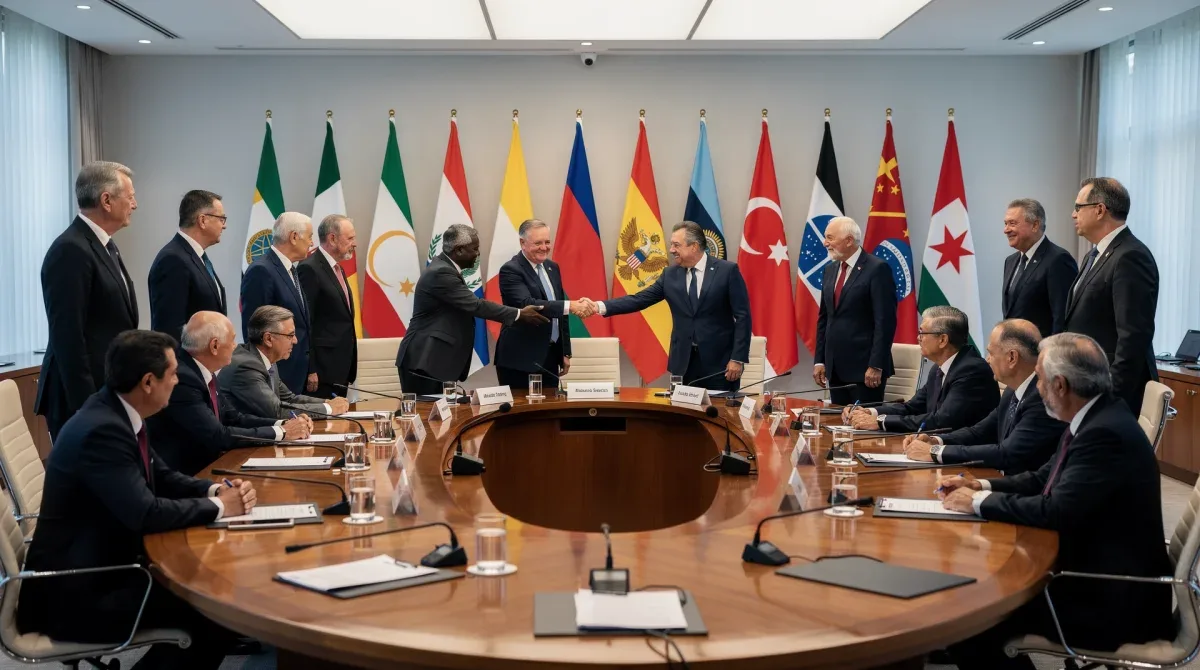
Ultimately, the MSP's success in stabilizing critical mineral supply chains will have far-reaching implications, fostering an environment where technological progress can flourish without being held hostage by resource scarcity or geopolitical maneuvering. It represents a strategic investment in the future of global industry and a testament to the power of multilateral cooperation in addressing complex economic challenges.
The Future of Critical Mineral Diplomacy Beyond 2026
Looking beyond 2026, the Minerals Security Partnership is expected to evolve, adapting to new technological advancements, geopolitical shifts, and emerging environmental considerations. The foundational work laid by the initial diplomatic push will serve as a springboard for more sophisticated and integrated strategies. The future of critical mineral diplomacy will likely involve a continuous balancing act between securing supply, promoting sustainability, and fostering innovation.
As the global energy transition accelerates, the demand for critical minerals will only intensify, placing greater pressure on existing supply chains. This necessitates a proactive and adaptive diplomatic approach that anticipates future needs and identifies potential bottlenecks before they become critical. The MSP's framework provides a robust platform for this ongoing strategic engagement.
Evolving Strategies and Emerging Trends
Several key trends and strategic considerations will shape the future of critical mineral diplomacy.
- Increased Recycling: Greater emphasis on urban mining and advanced recycling technologies to reduce reliance on primary extraction.
- New Mineral Discoveries: Continued exploration and development of new critical mineral deposits, including unconventional sources.
- Technological Substitution: Research into alternative materials that can reduce or eliminate the need for certain critical minerals.
- Digitalization of Supply Chains: Leveraging blockchain and AI for enhanced traceability, transparency, and efficiency in mineral supply chains.
The diplomatic efforts beyond 2026 will likely deepen existing partnerships and potentially expand to include new allies, particularly those with significant untapped resources or advanced technological capabilities. The focus will remain on building diverse, resilient, and ethically sourced supply chains, ensuring that the benefits of mineral wealth are shared broadly and sustainably.
Furthermore, the integration of environmental, social, and governance (ESG) factors will become even more central to critical mineral diplomacy. As consumer and regulatory pressures for sustainable sourcing grow, adherence to high ESG standards will be a non-negotiable aspect of future partnerships. This will involve robust monitoring, certification schemes, and capacity building in producing countries.
The Minerals Security Partnership, therefore, represents more than a temporary alliance; it is a long-term commitment to reshaping the global critical mineral landscape. Its continued success will depend on the sustained political will of its members, their adaptability to new challenges, and their collective dedication to building a secure, sustainable, and equitable future for critical mineral supply.
| Key Aspect | Brief Description |
|---|---|
| Partnership Goal | Secure critical mineral supply chains, reduce vulnerabilities, and ensure economic stability for 14 allied nations. |
| US Diplomatic Focus | Proactive engagement in 2026 to foster investments, policy alignment, and sustainable practices globally. |
| Key Challenges | Geopolitical competition, high investment costs, and ensuring robust environmental and social governance. |
| Future Outlook | Continued evolution with increased recycling, new discoveries, and advanced technological solutions beyond 2026. |
Frequently Asked Questions About the Minerals Security Partnership
What is the primary goal of the Minerals Security Partnership (MSP)?▼The primary goal of the MSP is to strengthen critical mineral supply chains by diversifying sources, promoting sustainable practices, and mobilizing investments with 14 global allies. This aims to reduce vulnerabilities and ensure stable access to essential materials for economic and national security.
Which countries are part of the 14 global allies in the MSP?▼The MSP includes a diverse group of countries such as Australia, Canada, Finland, France, Germany, Japan, Republic of Korea, Sweden, the United Kingdom, the United States, and the European Union (as a bloc). Other nations are continuously engaged in discussions.
How does the MSP address environmental concerns in mining?▼The MSP emphasizes promoting environmentally and socially responsible mining and processing standards. It encourages adherence to high ESG (Environmental, Social, and Governance) criteria, aiming to minimize ecological impact and ensure ethical labor practices across all critical mineral projects.
What role does the 2026 US diplomatic push play in the MSP?▼The 2026 US diplomatic push is a concentrated effort to accelerate the MSP's objectives. It involves intensified negotiations, investment facilitation, and policy coordination with allied nations to identify and develop new critical mineral projects and processing capabilities, ensuring long-term supply resilience.
Beyond securing new sources, what other strategies does the MSP employ?▼Beyond new sources, the MSP focuses on technological innovation, including advanced recycling and material substitution. It also promotes transparency and good governance in mineral trade, aiming to create a comprehensive and sustainable critical mineral ecosystem for the future.
Conclusion
The Minerals Security Partnership, particularly as advanced by the 2026 US diplomatic push, stands as a critical initiative in navigating the complex landscape of global resource security. By fostering collaboration among 14 global allies, the MSP aims to build resilient, diversified, and sustainable critical mineral supply chains. While challenges persist, the partnership's strategic framework and ongoing commitment signal a transformative approach to securing the essential materials that power modern economies and future innovations. Its success will be pivotal for sustained economic stability and technological progress worldwide.
