State Department's 2026 Security Aid: $6.5 Billion Shift Impact
The State Department's 2026 security assistance strategy outlines a significant $6.5 billion reallocation of foreign military aid, aiming to bolster global stability and align resources with emerging geopolitical priorities and threats.
Understanding the intricacies of the State Department's 2026 security assistance strategy is crucial for anyone interested in US foreign policy, as it signals a profound shift in how the United States approaches global security and allocates its substantial foreign military aid. This strategic pivot, encompassing a $6.5 billion reallocation, promises to redefine international partnerships and address evolving geopolitical challenges.
The evolving landscape of US security assistance
The United States has long utilized security assistance as a cornerstone of its foreign policy, employing it to foster stability, combat terrorism, and promote democratic values worldwide. However, the global landscape is in constant flux, necessitating regular reevaluations of these strategies. The 2026 security assistance strategy by the State Department is not merely an incremental adjustment; it represents a significant recalibration designed to meet contemporary and future threats head-on.
This strategic shift acknowledges that traditional approaches may no longer suffice in an era defined by hybrid warfare, cyber threats, and the rise of new geopolitical actors. The $6.5 billion reallocation is indicative of a move towards more agile, adaptable, and impact-driven programs. It reflects a deeper understanding that effective security assistance must be dynamic, capable of responding to crises while also building long-term resilience in partner nations.
Redefining strategic partnerships
A core element of the 2026 strategy involves a reassessment of existing strategic partnerships. The goal is to ensure that aid is directed towards partners who are not only willing but also capable of advancing shared security objectives. This doesn't necessarily mean abandoning long-standing allies, but rather optimizing support based on current geopolitical realities and the specific security challenges each partner faces.
- Enhanced focus on burden-sharing initiatives.
- Prioritizing partners demonstrating commitment to reforms.
- Tailoring aid packages to specific national security needs.
The re-evaluation also considers the effectiveness of past aid programs, seeking to learn from successes and failures. This introspective approach is vital for ensuring that every dollar of the $6.5 billion reallocation contributes meaningfully to US national interests and global security. It's about moving beyond transactional relationships to genuinely transformative partnerships.
In essence, the evolving landscape demands a more sophisticated and nuanced approach to security assistance. The 2026 strategy aims to deliver precisely that, by aligning resources with clear objectives and fostering stronger, more resilient international collaborations. This foundational shift is expected to have ripple effects across various regions, influencing everything from counter-terrorism efforts to maritime security.
Key components of the $6.5 billion foreign military aid shift
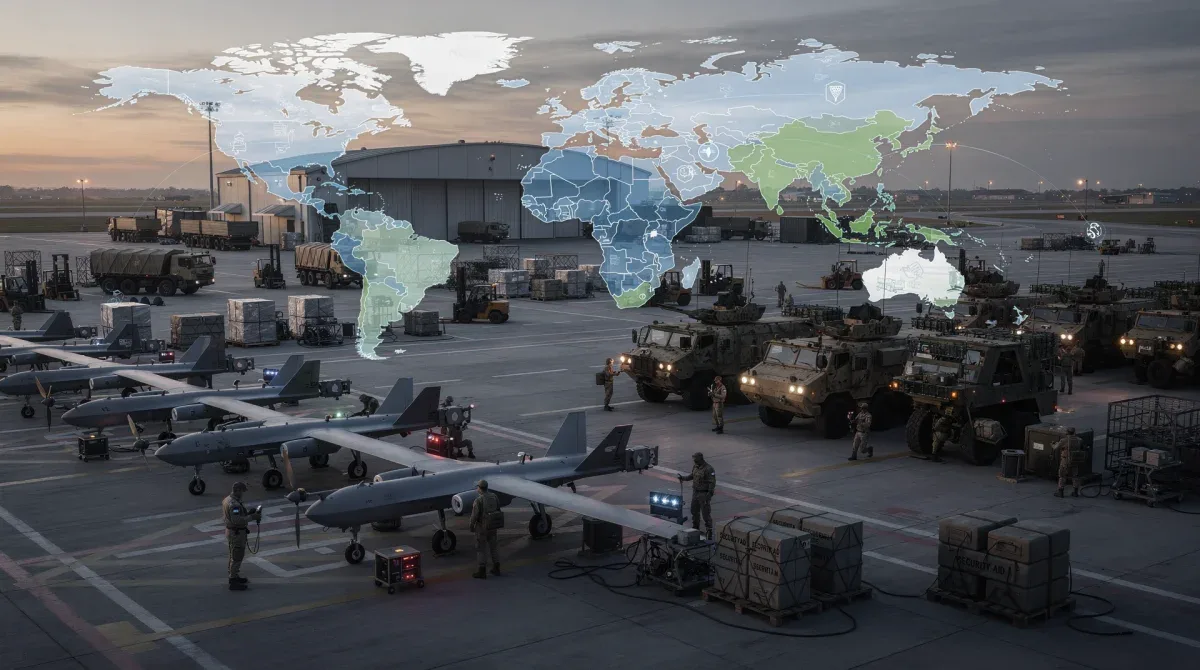
The $6.5 billion foreign military aid shift embedded within the State Department's 2026 security assistance strategy is multifaceted, touching upon various aspects of how the US engages with international partners on security matters. This substantial reallocation is not simply a budget cut or increase, but a strategic redeployment of resources to areas deemed most critical for US national security and global stability.
One of the primary components is the increased emphasis on capacity building rather than simply providing equipment. While hardware remains important, the strategy recognizes that sustainable security requires robust institutions, well-trained personnel, and effective operational doctrines within partner nations. This includes significant investments in training programs, professional military education, and advisory support missions.
Technological modernization and innovation
A significant portion of the reallocated funds will likely be directed towards modernizing the security capabilities of key partners, particularly in areas like cyber defense, intelligence sharing, and advanced surveillance technologies. The nature of modern warfare and security threats necessitates a technological edge, and the US aims to ensure its partners are equipped to face these challenges.
- Investment in joint cyber security initiatives.
- Deployment of cutting-edge reconnaissance tools.
- Support for secure communication networks.
This focus on technological innovation extends beyond merely supplying equipment; it involves fostering an ecosystem where partners can develop, maintain, and adapt these technologies independently. This approach aims to create self-sufficient allies, reducing long-term dependency while enhancing their immediate defensive capabilities. The shift also anticipates future threats, preparing partners for contingencies that may not yet be fully apparent.
Moreover, the strategy highlights the importance of interoperability, ensuring that US forces can seamlessly operate alongside partner militaries when required. This facilitates more effective joint operations, whether for humanitarian aid, counter-terrorism, or regional defense. The $6.5 billion shift is thus an investment in a more integrated and responsive global security apparatus.

Geopolitical implications and regional impacts
The State Department's 2026 security assistance strategy, with its $6.5 billion foreign military aid shift, is poised to have profound geopolitical implications, reshaping alliances and influencing regional power dynamics. The redirection of such a substantial sum inevitably sends signals to both allies and adversaries about US priorities and commitments.
Regions previously receiving significant aid might see adjustments, while others, particularly those at the forefront of emerging threats or strategic competition, could experience an increase in support. This dynamic reallocation is designed to optimize US influence and effectiveness in critical areas, aligning resources with evolving strategic imperatives rather than historical precedent.
Impact on key regions
For example, regions facing heightened aggression or instability, such as parts of Eastern Europe or the Indo-Pacific, are likely to see increased investment in defensive capabilities and training. This could involve bolstering air defense systems, enhancing naval presence, or strengthening border security initiatives. The aim is to deter potential adversaries and reassure allies of US resolve.
- Increased aid to countries bordering conflict zones.
- Strengthened maritime security partnerships in contested waters.
- Enhanced counter-terrorism efforts in volatile regions.
Conversely, some regions that have achieved a degree of stability or have developed their own robust security capabilities might see a gradual reduction or reorientation of aid, shifting towards more specialized forms of cooperation, such as intelligence sharing or joint research and development. This allows the US to free up resources for areas with more pressing needs, ensuring that the $6.5 billion is used with maximum strategic impact.
The geopolitical implications also extend to the messaging this shift conveys. It underscores a commitment to adaptive foreign policy, one that is not static but responsive to global changes. This adaptability is crucial for maintaining US leadership and influence in a multipolar world. The regional impacts will be closely watched by international observers, as they reveal the contours of future US engagement.
Challenges and opportunities in implementation
Implementing the State Department's 2026 security assistance strategy and managing the $6.5 billion foreign military aid shift presents a complex array of challenges and opportunities. The success of this ambitious recalibration will hinge on meticulous planning, effective coordination, and a clear understanding of the diverse contexts in which aid is deployed.
One significant challenge lies in ensuring transparency and accountability in the allocation and utilization of funds. Past security assistance programs have sometimes faced scrutiny over effectiveness and potential for misuse. The 2026 strategy must incorporate robust oversight mechanisms to mitigate these risks and demonstrate responsible stewardship of taxpayer dollars.
Navigating political sensitivities
Another hurdle involves navigating the political sensitivities of partner nations. Any shift in aid, whether an increase or decrease, can be perceived through a political lens, potentially impacting bilateral relations. The US must engage in careful diplomacy, explaining the rationale behind the changes and reassuring partners of continued commitment, even if the nature of that commitment evolves.
- Communicating strategic changes clearly to allies.
- Addressing concerns about potential aid reductions.
- Ensuring local ownership of security initiatives.
However, these challenges also present significant opportunities. The reallocation provides an chance to strengthen relationships with key partners by demonstrating a willingness to adapt to their evolving needs and priorities. It allows for the co-creation of security solutions, fostering greater trust and mutual respect.
Furthermore, the emphasis on capacity building and technological modernization can lead to more resilient and self-sufficient partners, ultimately reducing the long-term burden on US resources. The $6.5 billion shift is not just about spending money; it's about investing wisely in a more secure global future. The implementation phase will be critical in translating strategic intent into tangible outcomes.
Measuring success and accountability
A critical aspect of the State Department's 2026 security assistance strategy is the establishment of clear metrics for measuring success and robust mechanisms for accountability. With a $6.5 billion foreign military aid shift, it is imperative to demonstrate that these funds are being utilized effectively and are achieving their intended strategic objectives.
Traditional measures of success, such as the sheer volume of aid provided or equipment delivered, are increasingly being replaced by more outcome-oriented indicators. This includes assessing improvements in partner nations' security capabilities, their ability to counter specific threats, and their adherence to human rights standards.
Establishing clear performance indicators
The strategy emphasizes the development of specific, measurable, achievable, relevant, and time-bound (SMART) objectives for each security assistance program. This allows for continuous monitoring and evaluation, enabling the State Department to make data-driven adjustments as needed. Regular reporting and independent evaluations will be crucial for maintaining transparency.
- Tracking improvements in partner military readiness.
- Assessing the reduction of specific security threats.
- Evaluating adherence to governance and human rights principles.
Accountability also extends to the US agencies involved in administering security assistance. Enhanced interagency coordination between the State Department, Department of Defense, and other relevant bodies will ensure a unified approach and prevent duplication of efforts. This collaborative model is essential for maximizing the impact of the $6.5 billion reallocation.
Ultimately, measuring success and ensuring accountability are not just about fiscal responsibility; they are about demonstrating the tangible benefits of US foreign policy. By clearly articulating goals, tracking progress, and holding all stakeholders accountable, the 2026 strategy aims to build greater public trust and secure continued support for vital security assistance programs. This rigorous approach ensures that the investment yields meaningful returns for global security.
The future of US foreign policy and global stability
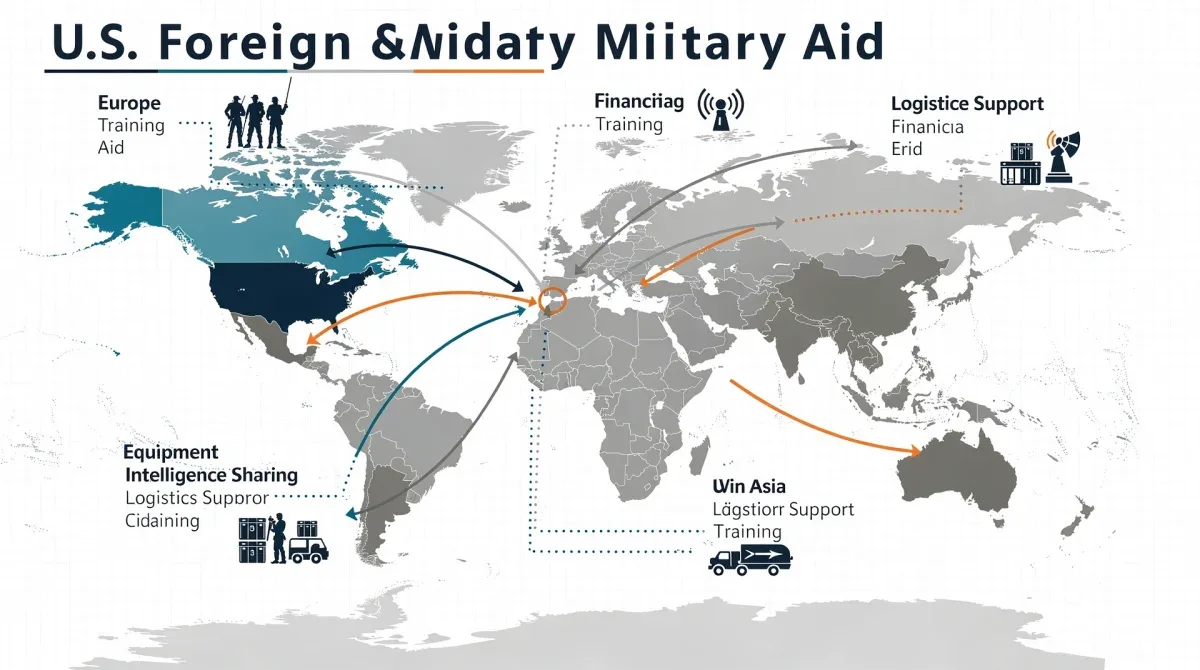
The State Department's 2026 security assistance strategy, with its impactful $6.5 billion foreign military aid shift, is not just a tactical adjustment; it's a strategic blueprint for the future of US foreign policy and its role in fostering global stability. This recalibration signals a proactive approach to an increasingly complex world, aiming to anticipate rather than merely react to emerging threats.
By investing in the capacity of partner nations and adapting to new geopolitical realities, the US seeks to build a more resilient and interconnected global security architecture. This involves a commitment to multilateralism, working closely with international organizations and regional alliances to address shared challenges effectively.
Long-term vision for security assistance
The long-term vision behind the 2026 strategy is to create a network of capable and reliable partners who can collectively contribute to maintaining peace and security. This moves beyond a purely donor-recipient relationship towards one of genuine partnership, where mutual interests and shared responsibilities are prioritized. The $6.5 billion reallocation is a foundational step in realizing this vision.
- Fostering regional security initiatives led by partners.
- Promoting democratic governance and rule of law as foundational to security.
- Encouraging diplomatic solutions alongside security cooperation.
Furthermore, the strategy recognizes that global stability is intrinsically linked to economic prosperity and human development. Therefore, security assistance will increasingly be integrated with broader development goals, addressing root causes of instability such as poverty, inequality, and lack of opportunity. This holistic approach aims to create environments where security can truly flourish.
The future of US foreign policy, as outlined in this strategy, is one of strategic engagement, adaptive resource allocation, and a deep commitment to fostering a more secure and stable world. The $6.5 billion shift in foreign military aid is a testament to this commitment, representing a deliberate investment in a future where global challenges are met with collective strength and purpose. The impacts will be far-reaching, shaping international relations for years to come.
| Key Point | Brief Description |
|---|---|
| Strategic Reallocation | The State Department's 2026 strategy shifts $6.5 billion in foreign military aid to align with evolving global threats. |
| Capacity Building Focus | Emphasis on strengthening partner nations' institutions and personnel over mere equipment provision. |
| Geopolitical Impact | Aims to reshape alliances and optimize US influence in critical regions based on current strategic imperatives. |
| Accountability & Metrics | Focus on outcome-oriented indicators and robust oversight to ensure effective use of funds. |
Frequently asked questions about the 2026 security assistance strategy
What is the primary goal of the State Department's 2026 security assistance strategy?▼The primary goal is to adapt US security assistance to evolving global threats and geopolitical realities, ensuring aid is strategically allocated to enhance global stability and support key partners more effectively.
How does the $6.5 billion foreign military aid shift impact partner nations?▼The shift will likely lead to reallocations, with some partners receiving increased support for specific capabilities like cyber defense, while others may see aid reoriented towards specialized cooperation, depending on strategic priorities.
What are the key components of this new strategy?▼Key components include enhanced capacity building, technological modernization, a re-evaluation of strategic partnerships, and a strong focus on measurable outcomes and accountability in aid utilization.
How will success be measured under the 2026 strategy?▼Success will be measured through outcome-oriented indicators, such as improvements in partner capabilities, reduction of specific threats, and adherence to governance standards, rather than just the volume of aid provided.
What are the long-term implications for US foreign policy?▼The strategy aims to build a more resilient global security architecture, fostering a network of capable partners and integrating security assistance with broader development goals for sustained peace and stability.
Conclusion
The State Department's 2026 security assistance strategy, marked by a significant $6.5 billion foreign military aid shift, represents a pivotal moment in US foreign policy. This comprehensive recalibration underscores a commitment to adaptive engagement, seeking to optimize resources and forge stronger, more effective partnerships in the face of an ever-changing global security landscape. By prioritizing capacity building, technological advancement, and rigorous accountability, the strategy aims to not only address immediate threats but also to lay the groundwork for a more stable and secure international environment for years to come. Its successful implementation will be crucial for maintaining US leadership and fostering collective security.
