Taiwan Strait Deterrence 2026: US Sea Lane Impact
The 2026 Taiwan Strait deterrence strategy involves complex scenarios directly impacting U.S. strategic sea lanes, requiring careful evaluation of military, economic, and diplomatic responses to maintain regional stability and global trade routes.
Evaluating the 2026 Taiwan Strait Deterrence Strategy: 3 Scenarios Impacting U.S. Strategic Sea Lanes is more than just an academic exercise; it's a critical examination of potential future conflicts and their profound global repercussions. Understanding these scenarios is vital for anyone interested in international security and economic stability.
The Geopolitical Chessboard of the Taiwan Strait
The Taiwan Strait remains one of the world's most volatile geopolitical flashpoints, a narrow body of water separating mainland China from Taiwan. Its strategic importance cannot be overstated, not only for regional powers but also for global trade and security, particularly for the United States. The year 2026 looms as a crucial juncture, with various factors potentially converging to redefine the deterrence landscape.
Control over or influence within the Taiwan Strait directly impacts the flow of international commerce, given that a significant portion of global shipping, including vital energy and raw material supplies, traverses these waters. Any disruption here would send shockwaves through the world economy, affecting supply chains and consumer prices globally. For the U.S., these sea lanes are not merely economic arteries but also critical conduits for military projection and logistical support throughout the Indo-Pacific region.
Historical Context and Evolving Dynamics
The historical backdrop of the Taiwan Strait dispute is complex, rooted in the Chinese Civil War. While the People's Republic of China (PRC) views Taiwan as a breakaway province destined for reunification, by force if necessary, Taiwan maintains its democratic self-governance. The U.S. has adopted a policy of "strategic ambiguity," acknowledging the 'One China' policy while also providing Taiwan with defensive capabilities. This delicate balance is continually tested by evolving military capabilities and shifting geopolitical alignments.
- PRC's Military Modernization: China's rapid military expansion, particularly its naval and air forces, significantly alters the power balance in the Strait.
- Taiwan's Defensive Posture: Taiwan continues to invest in asymmetric defense strategies, aiming to deter an invasion or make it prohibitively costly.
- U.S. Alliance Network: The U.S. leverages its alliances with regional partners like Japan, South Korea, and Australia to project power and maintain stability.
The interplay of these elements creates a dynamic environment where deterrence is not static but a constantly recalibrated equation. Understanding the nuances of these interactions is essential to evaluating any future strategy. The potential for miscalculation, given the high stakes involved, is a constant concern for policymakers and strategists.
In conclusion, the Taiwan Strait is a focal point where historical grievances, national aspirations, and global economic interests intersect. The strategies employed by all parties, particularly the U.S. in its deterrence efforts, will determine the region's future stability and the unimpeded flow of global trade through these critical sea lanes. The implications of any shift in this delicate balance are far-reaching and demand continuous, rigorous analysis.
Scenario 1: Enhanced Deterrence and Status Quo Maintenance
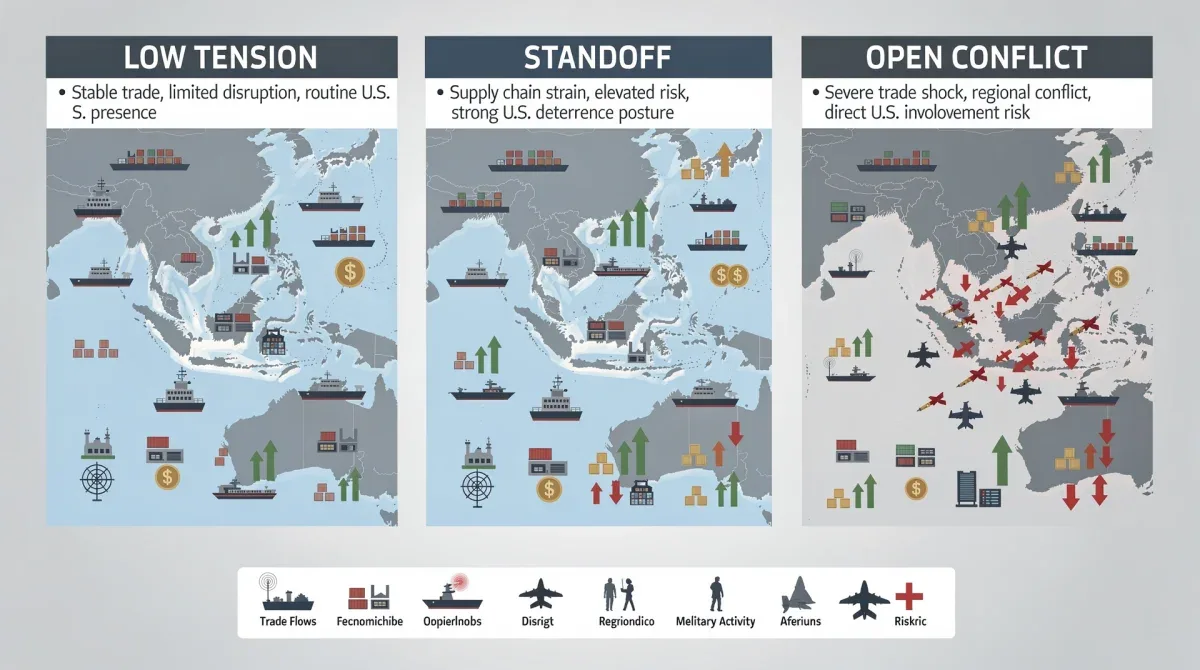
In this first scenario for 2026, the primary objective is to maintain the existing status quo through significantly enhanced deterrence. This involves a multi-faceted approach combining robust military presence, strengthened diplomatic efforts, and targeted economic measures designed to dissuade any aggressive actions in the Taiwan Strait. The underlying assumption is that a clear demonstration of capability and resolve can prevent escalation.
For the U.S., this scenario necessitates a palpable increase in its military footprint in the Indo-Pacific. This isn't just about deploying more ships or aircraft; it's about showcasing advanced capabilities, conducting complex joint exercises with allies, and improving interoperability. The goal is to present a credible threat of intervention that makes any attempt to alter the status quo by force appear too costly for potential aggressors.
Key Elements of Enhanced Deterrence
This strategy relies on several pillars that work in concert to create a formidable deterrent. Each component must be meticulously planned and executed to ensure its effectiveness and avoid unintended provocations.
- Increased Naval and Air Patrols: Regular and visible patrols in international waters and airspace near Taiwan send a strong signal of commitment.
- Advanced Weapon Systems Deployment: Positioning cutting-edge defense systems, including anti-ship missiles and air defense assets, within range of the Strait.
- Strengthened Alliances: Deepening military and intelligence cooperation with key regional allies like Japan, South Korea, Australia, and the Philippines.
- Cyber Deterrence Capabilities: Developing and publicly demonstrating advanced cyber warfare capabilities that could impose significant costs on an aggressor.
Diplomatically, the U.S. would intensify efforts to build a united front among like-minded nations, emphasizing the shared interest in a peaceful and stable Indo-Pacific. This includes advocating for international law, promoting dialogue, and condemning any actions that threaten regional security. Economically, discussions would focus on leveraging global economic interdependence to create disincentives for aggression, potentially through coordinated sanctions frameworks.
Maintaining the status quo through enhanced deterrence, while ideal, is a delicate balancing act. It requires constant vigilance, clear communication, and a willingness to adapt to evolving threats. The success of this scenario hinges on the credibility of the deterrent and the collective resolve of the international community to uphold peace and stability in one of the world's most critical regions. The strategic sea lanes remain open, but under a constant, watchful eye.
Scenario 2: Limited Conflict and Regional Escalation
A second, more concerning scenario for 2026 involves a limited conflict in the Taiwan Strait, leading to regional escalation. This scenario posits that deterrence fails to fully prevent an initial aggressive act, perhaps a blockade or a targeted military strike against Taiwan, leading to a measured but firm U.S. and allied response. The challenge here is to contain the conflict while still achieving strategic objectives and protecting critical interests, especially U.S. strategic sea lanes.
In this situation, the U.S. would likely engage in actions aimed at disrupting the aggressor's operations and imposing costs, without necessarily triggering a full-scale conventional war. This could involve naval interdiction operations to break a blockade, targeted strikes against military assets, or robust cyber countermeasures. The immediate impact on global shipping would be severe, with significant rerouting and increased insurance costs, directly affecting the U.S. economy and its allies.

Impact on U.S. Strategic Sea Lanes
The very nature of a limited conflict in the Taiwan Strait would immediately threaten the unimpeded flow of trade and military logistics through these vital waterways. Shipping companies would face immense pressure to avoid the conflict zone, leading to longer transit times and higher operational costs. For the U.S. military, maintaining open sea lanes for resupply and reinforcement would become a paramount operational challenge.
- Choke Point Disruption: The Taiwan Strait itself would become a highly contested area, severely limiting commercial traffic.
- Supply Chain Vulnerabilities: Critical components, especially semiconductors from Taiwan, would face immediate disruption, impacting global industries.
- Increased Naval Protection: U.S. and allied navies would need to dedicate significant resources to protect commercial vessels attempting to navigate alternative routes.
- Economic Volatility: Global markets would react sharply, leading to increased commodity prices and financial instability.
The risk of regional escalation is ever-present in this scenario. A limited conflict could quickly spiral out of control due to miscalculations, accidental engagements, or the strategic imperative of involved parties to achieve decisive outcomes. The U.S. would face immense pressure to balance its commitment to Taiwan with the need to prevent a wider war, potentially drawing in other regional powers.
Ultimately, a limited conflict scenario demands a highly agile and adaptable U.S. response, focusing on de-escalation while simultaneously protecting its strategic interests and those of its allies. The preservation of U.S. strategic sea lanes, even if through alternative routes, would be a critical component of any such response, highlighting the enduring importance of maritime dominance and logistical resilience.
Scenario 3: Full-Scale Invasion and Global Confrontation
The most dire scenario for 2026 envisions a full-scale invasion of Taiwan, leading to a global confrontation. This outcome represents a catastrophic failure of deterrence, where a major power initiates a comprehensive military operation to seize Taiwan. Such an event would inevitably draw in the United States and its allies, transforming a regional crisis into a global conflict with far-reaching economic, political, and human costs.
In this scenario, the U.S. would be compelled to respond with overwhelming force, not only to defend Taiwan but also to uphold the international rules-based order and protect its fundamental strategic interests. This would involve a large-scale deployment of naval, air, and ground forces, likely in coordination with key allies. The immediate and long-term impacts on U.S. strategic sea lanes would be profound and devastating.
Catastrophic Impact on Global Maritime Trade
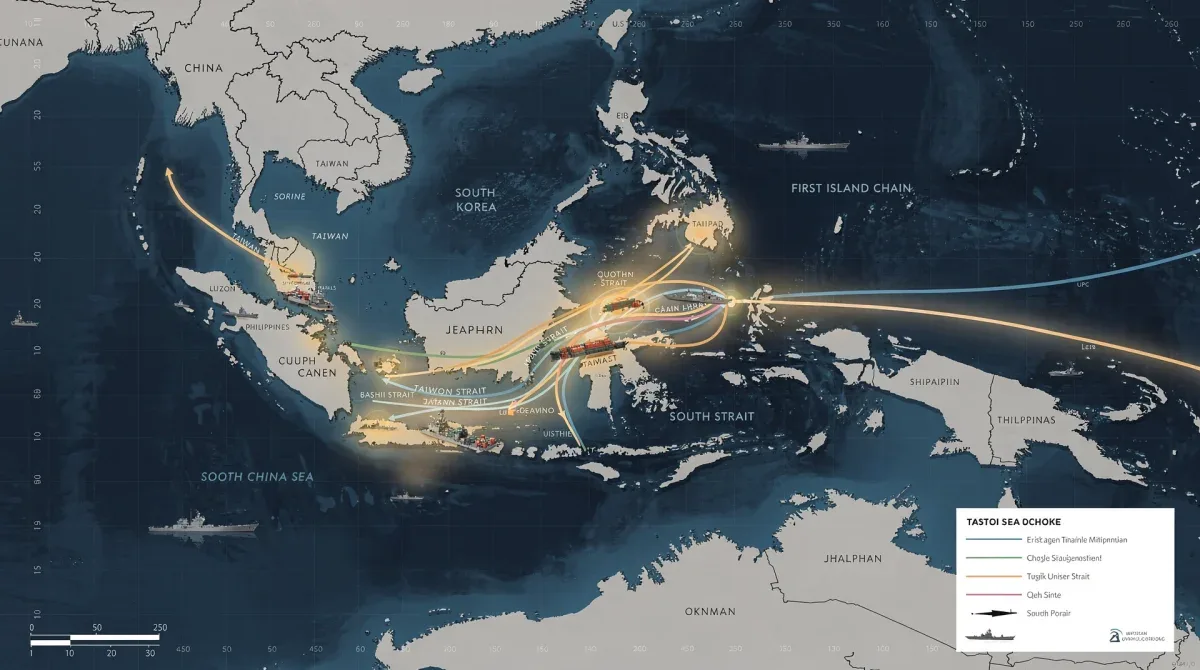
A full-scale invasion would effectively close the Taiwan Strait and surrounding waters to commercial traffic, forcing a complete re-evaluation of global shipping routes. The sheer scale of military operations would render the area impassable, leading to unprecedented disruptions in global supply chains. The repercussions would extend far beyond the immediate conflict zone, affecting every economy reliant on maritime trade.
- Complete Sea Lane Closure: The Taiwan Strait and adjacent waters would become an active war zone, making commercial navigation impossible.
- Global Supply Chain Collapse: Industries worldwide, particularly those dependent on East Asian manufacturing and raw materials, would face severe shortages.
- Energy Market Chaos: Interruptions to oil and gas shipments through the South China Sea would trigger a global energy crisis.
- Military Logistics Strain: U.S. strategic sea lanes would be entirely repurposed for military resupply, straining global logistical capabilities.
Beyond the immediate military engagement, a full-scale invasion would trigger a global economic recession, exacerbate geopolitical tensions worldwide, and potentially lead to a new era of great power competition. The U.S. would face the immense challenge of sustaining a protracted conflict while simultaneously managing domestic economic fallout and rallying international support.
This scenario underscores the critical importance of effective deterrence in the Taiwan Strait. The costs associated with a full-scale invasion are so immense that every effort must be made to prevent such an outcome. The protection of U.S. strategic sea lanes, while critical, would be overshadowed by the broader imperative of global stability and the prevention of a catastrophic worldwide conflict.
The Economic Repercussions on U.S. Strategic Sea Lanes
Beyond the immediate military considerations, the economic repercussions of any scenario in the Taiwan Strait on U.S. strategic sea lanes are immense and far-reaching. The strait is not just a geopolitical hotspot; it's a critical artery for global commerce, particularly for the movement of goods between East Asia and the rest of the world. Any disruption, from a blockade to a full-scale conflict, would have significant economic costs for the United States.
The U.S. economy relies heavily on imports and exports that traverse the Pacific, with a substantial portion passing through or near the Taiwan Strait. This includes everything from consumer electronics and automotive parts to critical raw materials. A disturbance in these sea lanes would lead to immediate supply chain shocks, impacting various sectors of the U.S. economy, from manufacturing to retail.
Direct and Indirect Economic Impacts
The economic fallout would manifest in several ways, affecting both direct trade flows and broader market stability. Understanding these mechanisms is crucial for assessing the total cost of any Taiwan Strait contingency.
- Increased Shipping Costs: Rerouting vessels around a conflict zone would add thousands of miles to journeys, significantly increasing fuel consumption and labor costs.
- Supply Chain Disruptions: Delays and shortages of key components, particularly semiconductors from Taiwan, would cripple industries reliant on just-in-time manufacturing.
- Inflationary Pressures: Higher transportation costs and reduced supply would inevitably lead to increased prices for consumers, fueling inflation.
- Investment Volatility: Global markets would react with extreme caution, leading to capital flight from the region and increased volatility in financial assets.
Furthermore, the U.S. role as a global economic leader would be challenged. Its ability to ensure the free flow of goods and maintain market stability would be tested. The economic health of key allies in the Indo-Pacific, such as Japan and South Korea, is also intricately linked to the stability of these sea lanes, meaning any disruption would have cascading effects on the U.S. alliance network.
In conclusion, the economic stakes in the Taiwan Strait are incredibly high for the U.S. The smooth functioning of its strategic sea lanes is not just a military convenience but a fundamental pillar of its economic prosperity. Protecting these routes, whether through deterrence or direct intervention, carries significant economic implications that must be carefully weighed in any strategic calculus.
U.S. Alliance Network and Regional Security
The strength and cohesion of the U.S. alliance network in the Indo-Pacific are pivotal to any deterrence strategy concerning the Taiwan Strait. These alliances, forged over decades, provide a framework for collective security, intelligence sharing, and coordinated military responses. The effectiveness of U.S. strategic sea lane protection and overall regional stability hinges significantly on the active participation and commitment of its partners.
Countries like Japan, South Korea, Australia, and the Philippines are not merely passive observers; they are vital stakeholders with their own national interests tied to the stability of the Taiwan Strait. Their geographic proximity and military capabilities make them indispensable partners in any contingency. A unified front amplifies deterrence, making any aggressive action appear far more daunting and costly to a potential aggressor.
Strengthening Collective Defense Capabilities
Enhancing the U.S. alliance network involves more than just diplomatic rhetoric; it requires concrete actions to improve interoperability, share burdens, and build trust. This includes joint military exercises, technology transfers, and coordinated diplomatic initiatives.
- Joint Military Exercises: Regular, complex drills enhance readiness and demonstrate collective resolve.
- Information Sharing: Robust intelligence sharing mechanisms provide a clearer picture of potential threats and allow for coordinated responses.
- Defense Capacity Building: Assisting allies in modernizing their own defense forces strengthens regional resilience.
- Multilateral Diplomatic Engagements: Forums like the Quad (Quadrilateral Security Dialogue) and AUKUS (Australia, United Kingdom, United States) provide platforms for strategic coordination.
The U.S. policy of strategic ambiguity regarding Taiwan complicates alliance coordination, as partners seek clarity on the extent of U.S. commitment. However, open communication and consistent engagement can mitigate these concerns, ensuring allies understand their roles and responsibilities in various scenarios. The shared economic interests, particularly the reliance on open sea lanes, also serve as a powerful unifying factor.
In conclusion, the U.S. alliance network is an irreplaceable asset in the context of Taiwan Strait deterrence. Its collective strength not only contributes to maintaining regional security but also directly supports the protection of U.S. strategic sea lanes. Investing in these partnerships is paramount for navigating the complex geopolitical landscape of the Indo-Pacific.
Future Outlook: Adapting Deterrence Strategies for 2026
As we look towards 2026, the imperative to adapt and evolve deterrence strategies for the Taiwan Strait becomes increasingly clear. The geopolitical landscape is fluid, marked by rapid technological advancements, shifting power dynamics, and evolving doctrines of warfare. A static approach to deterrence is a failing one; instead, a dynamic, multi-domain strategy is required to effectively safeguard U.S. strategic sea lanes and regional stability.
Future deterrence must integrate conventional military strength with cutting-edge capabilities in cyber warfare, space, and information operations. The goal is to create a layered defense that complicates an aggressor's calculations at every stage, from initial planning to execution. This involves not only investing in new technologies but also rethinking how these capabilities are integrated into a cohesive strategic framework.
Key Areas for Strategic Adaptation
Several critical areas demand focused attention to ensure deterrence remains effective in the coming years. These adaptations are not merely incremental changes but fundamental shifts in approach.
- Asymmetric Warfare Investment: Supporting Taiwan's development of capabilities that exploit an aggressor's vulnerabilities, making an invasion prohibitively costly.
- Resilient Logistics: Developing distributed and hardened logistical networks to ensure U.S. forces and allies can operate effectively even under contested conditions.
- Enhanced Intelligence and Surveillance: Improving real-time intelligence gathering and analysis to detect early warning signs of aggression and inform rapid responses.
- Diplomatic Flexibility: Maintaining open channels of communication with all parties, while simultaneously building stronger international consensus against unilateral changes to the status quo.
The concept of integrated deterrence, which combines military, economic, diplomatic, and informational tools, will be central to this adaptation. It aims to present a comprehensive front that signals unwavering resolve and the potential for severe consequences across multiple domains. This holistic approach seeks to influence an aggressor's decision-making by demonstrating that the costs of aggression far outweigh any potential benefits.
In conclusion, the future outlook for Taiwan Strait deterrence in 2026 requires continuous innovation and strategic foresight. Adapting to new threats and leveraging emerging opportunities will be crucial for protecting U.S. strategic sea lanes and ensuring the long-term peace and prosperity of the Indo-Pacific region. The challenge is complex, but the stakes demand nothing less than a comprehensive and adaptable strategy.
| Key Point | Brief Description |
|---|---|
| Enhanced Deterrence | Maintaining status quo through military presence, diplomatic efforts, and economic measures. |
| Limited Conflict | Initial aggressive act, U.S. response to contain conflict, severe impact on sea lanes. |
| Full-Scale Invasion | Catastrophic failure of deterrence, global confrontation, complete sea lane closure. |
| Economic Repercussions | Disruptions lead to increased shipping costs, supply chain issues, inflation, and market volatility. |
Frequently Asked Questions About Taiwan Strait Deterrence
What is the primary goal of U.S. deterrence in the Taiwan Strait?▼The primary goal is to maintain peace and stability, preventing any unilateral change to the status quo by force. This protects Taiwan's self-governance and ensures the free flow of commerce through vital international sea lanes, which are crucial for global trade and U.S. economic interests.
How would a Taiwan Strait conflict impact U.S. strategic sea lanes?▼A conflict would severely disrupt U.S. strategic sea lanes, forcing rerouting, increasing shipping costs, and jeopardizing global supply chains. Military logistics would also face immense challenges in resupplying forces. This disruption would have significant economic repercussions for the United States and its allies.
What role do U.S. alliances play in Taiwan Strait deterrence?▼U.S. alliances with regional partners like Japan and Australia are crucial. They provide a collective security framework, enhance military interoperability, and amplify deterrence by presenting a unified front. These alliances are vital for intelligence sharing, coordinated responses, and protecting shared strategic interests in the Indo-Pacific.
What are the economic consequences of a full-scale invasion scenario?▼A full-scale invasion would lead to catastrophic economic consequences, including the closure of major shipping routes, collapse of global supply chains (especially semiconductors), soaring energy prices, and severe financial market volatility. This would trigger a global recession, impacting every major economy, including the U.S.
How is deterrence strategy evolving for 2026 and beyond?▼Deterrence is evolving to be more integrated and multi-domain, combining conventional military strength with cyber, space, and information operations. The focus is on asymmetric warfare, resilient logistics, enhanced intelligence, and flexible diplomacy to adapt to new threats and maintain a credible deterrent against aggression in the Taiwan Strait.
Conclusion
The evaluation of the 2026 Taiwan Strait deterrence strategy, through its three primary scenarios, underscores the profound complexities and immense stakes involved for U.S. strategic sea lanes and global stability. From maintaining a fragile status quo to navigating the perils of limited or full-scale conflict, each pathway presents unique challenges and demands a highly adaptive, multi-faceted response. The protection of critical maritime arteries, essential for both economic prosperity and military projection, remains paramount. Ultimately, effective deterrence hinges on a credible military posture, robust alliances, and astute diplomatic engagement, all working in concert to prevent catastrophic outcomes and secure a peaceful, open Indo-Pacific.
