Red Sea Trade Disruption: US Alliances & 18% Reroute Impact
The Red Sea trade disruption, characterized by an 18% shipping reroute, significantly impacts global supply chains and profoundly reshapes US transatlantic alliances, necessitating new strategic considerations by 2026 for maritime security and economic stability.
The recent intensification of the Red Sea trade disruption has become a pivotal concern for global commerce and international relations. This strategic 18% shipping reroute impact on US transatlantic alliances in 2026 is not merely an economic challenge but a complex geopolitical puzzle.
Understanding the Red Sea Trade Disruption
The Red Sea, a vital maritime artery connecting Europe, Asia, and Africa, has recently become a flashpoint for geopolitical tensions, leading to unprecedented disruptions in global shipping. This narrow waterway, flanked by politically volatile regions, is crucial for the passage of oil, gas, and manufactured goods. The current challenges stem from a combination of regional conflicts and non-state actors targeting commercial vessels, forcing a significant shift in established trade routes.
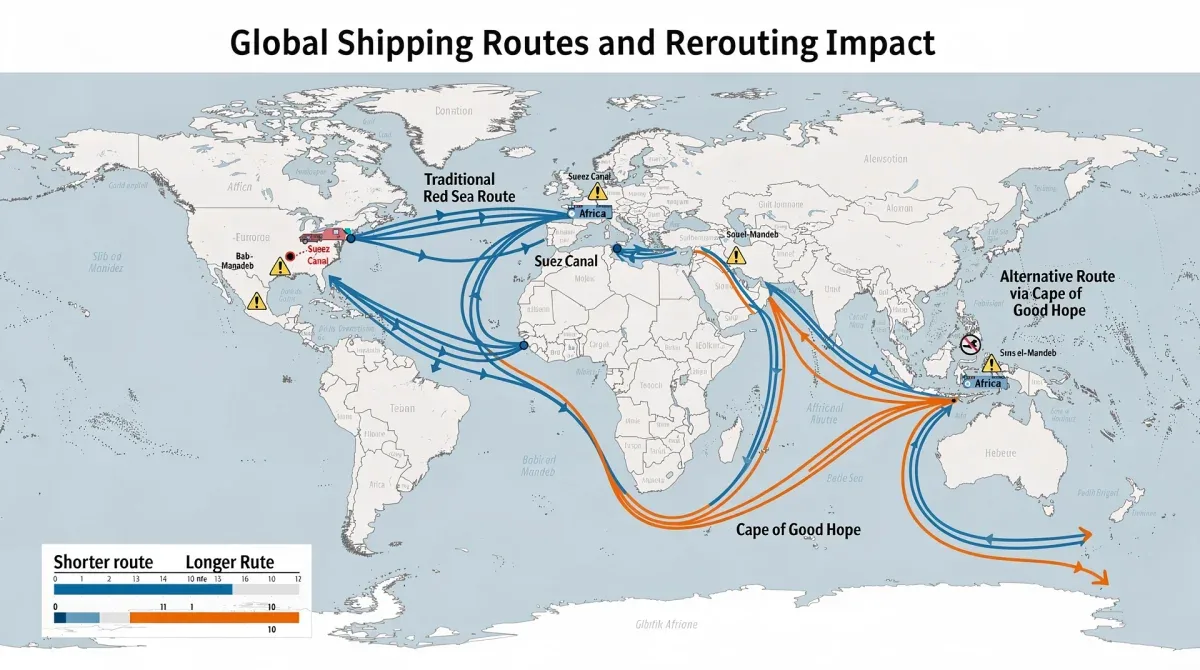
The disruption has been escalating, prompting major shipping companies to reconsider their passage through the Suez Canal and the Red Sea. This strategic reassessment has led to an 18% reroute of global shipping traffic, diverting vessels around the Cape of Good Hope. This longer, more costly journey has far-reaching implications, extending beyond mere logistical inconveniences to impact global economies and international alliances.
Historical Context of Red Sea Importance
Historically, the Red Sea has been a cornerstone of global trade, dating back to ancient civilizations. Its strategic location, especially after the opening of the Suez Canal, dramatically reduced transit times between East and West. This efficiency has made it indispensable for modern supply chains.
- Ancient Trade Routes: Facilitated spice and silk trade for millennia.
- Suez Canal Opening: Revolutionized global shipping in 1869, cutting thousands of miles from journeys.
- Modern Economic Lifeline: Essential for oil, natural gas, and containerized cargo movement.
- Chokepoint Vulnerability: Its narrow passages make it susceptible to blockades and attacks.
The ongoing situation underscores the inherent vulnerabilities of relying on a single, critical maritime chokepoint. The increased risks have forced a reevaluation of maritime security protocols and international cooperation efforts, highlighting the interconnectedness of global trade and geopolitical stability. This section concludes by emphasizing that the Red Sea's importance is not just historical but remains paramount for contemporary global commerce, making its disruption a matter of international urgency.
Economic Fallout: Increased Costs and Supply Chain Strain
The rerouting of 18% of global shipping traffic away from the Red Sea and around the Cape of Good Hope has initiated a cascade of economic consequences. This longer journey translates directly into higher fuel consumption, increased operational costs, and extended transit times for cargo. These added expenses are inevitably passed down the supply chain, leading to higher prices for consumers and impacting businesses globally.
The strain on supply chains is multifaceted. Delays in delivery disrupt manufacturing schedules, create inventory shortages, and reduce market responsiveness. Industries heavily reliant on just-in-time inventory management are particularly vulnerable, facing potential production halts and lost revenue. The cumulative effect is a significant drag on economic growth, threatening to exacerbate inflationary pressures already present in many economies.
Impact on Consumer Goods and Energy Markets
Consumers in the United States and Europe are already beginning to feel the pinch. Products ranging from electronics to apparel, which typically traverse the Red Sea, face delayed arrivals and increased retail prices. Energy markets are also severely affected, as a substantial portion of global oil and liquefied natural gas (LNG) shipments pass through this corridor.
- Retail Price Hikes: Consumers pay more due to higher shipping costs.
- Delivery Delays: Longer transit times for goods from Asia to the West.
- Energy Market Volatility: Increased uncertainty in oil and gas supplies and prices.
- Manufacturing Disruptions: Shortages of components and raw materials affecting production.
The additional time at sea also ties up valuable capital in transit, reducing liquidity for businesses. This financial strain, combined with logistical headaches, forces companies to re-evaluate their sourcing and distribution strategies. The economic fallout from the Red Sea disruption is not a temporary inconvenience but a structural challenge demanding long-term solutions, impacting everything from daily consumer purchases to strategic national energy reserves.
Shifting Geopolitical Dynamics: US Transatlantic Alliances
The Red Sea trade disruption extends far beyond economic concerns, profoundly reshaping geopolitical dynamics, particularly for US transatlantic alliances. The crisis has highlighted vulnerabilities in global maritime security and exposed differing approaches among allies on how to best address these threats. The United States, traditionally a guarantor of open sea lanes, finds itself navigating a complex diplomatic landscape while trying to maintain unity and effectiveness within its alliance structures.
European nations, heavily reliant on the Red Sea route for their trade, have a direct economic stake in its stability. This shared interest, however, does not always translate into a unified strategic response. Divergent national interests, historical perspectives, and resource limitations can complicate coordinated action, putting pressure on the cohesion of transatlantic partnerships. By 2026, the effectiveness of these alliances in responding to such crises will be a critical measure of their strength.

Challenges to Alliance Cohesion
The crisis has tested the operational and strategic alignment between the US and its European allies. While there is a general consensus on the need to protect shipping, the specific methods, levels of engagement, and burden-sharing arrangements have been subjects of intense discussion. This can lead to perceived cracks in alliance unity, which adversaries might seek to exploit.
- Differing Threat Perceptions: Allies may prioritize threats differently based on their immediate national interests.
- Resource Allocation Debates: Discussions over who contributes what military and financial resources.
- Strategic Autonomy vs. Collective Security: European desires for greater strategic autonomy sometimes clash with integrated alliance operations.
- Diplomatic Coordination: The need for constant, high-level diplomatic efforts to maintain a unified front.
Furthermore, the disruption forces allies to re-evaluate their collective defense postures and invest more significantly in naval capabilities and intelligence sharing. The long-term implications for NATO and other security frameworks are substantial, requiring a renewed commitment to maritime domain awareness and rapid response mechanisms. The ability of the US and its transatlantic partners to forge a cohesive and effective strategy in the Red Sea will set a precedent for future responses to global security challenges, shaping the future of these crucial alliances.
US Strategic Responses and Naval Deployments
In response to the escalating Red Sea trade disruption, the United States has initiated a robust series of strategic responses, primarily centered around increased naval deployments and the formation of multinational maritime task forces. The objective is clear: to safeguard international shipping, deter further attacks, and restore stability to this critical waterway. These deployments underscore the US commitment to freedom of navigation and the protection of global economic interests, particularly those affecting its own economy and its allies.
The presence of US naval assets, including aircraft carriers, destroyers, and support vessels, serves as a powerful deterrent. These forces are equipped with advanced capabilities to monitor, intercept, and neutralize threats to commercial shipping. However, the sustained nature of these deployments also places considerable strain on naval resources and personnel, raising questions about long-term sustainability and the broader implications for global force posture.
Multinational Operations and Partnerships
Beyond unilateral deployments, the US has actively sought to build and strengthen multinational partnerships to address the Red Sea crisis. Initiatives like Operation Prosperity Guardian aim to bring together naval forces from various allied nations to collectively patrol and protect the shipping lanes. This collaborative approach is vital for sharing the burden, enhancing intelligence gathering, and presenting a united front against threats.
- Operation Prosperity Guardian: A US-led initiative involving multiple countries for maritime security.
- Enhanced Intelligence Sharing: Collaborating with allies to track threats and inform shipping companies.
- Capacity Building: Assisting regional partners in strengthening their own maritime defense capabilities.
- Diplomatic Engagements: Working with international bodies and regional powers to de-escalate tensions.
The success of these strategic responses hinges on sustained international cooperation and the ability to adapt to evolving threats. While naval deployments provide immediate protection, a comprehensive strategy also involves diplomatic efforts to address the root causes of instability in the region. The US approach in the Red Sea is a testament to its role as a global maritime power, balancing direct intervention with multilateral engagement to secure vital trade routes and uphold international law.
Impact on Global Supply Chains by 2026
The Red Sea trade disruption and the consequent 18% shipping reroute are set to leave an indelible mark on global supply chains by 2026. This is not merely a short-term hurdle but a catalyst for fundamental shifts in how international logistics are structured and managed. Businesses are already recalibrating their strategies, moving away from hyper-efficient, just-in-time models towards more resilient, albeit potentially more costly, alternatives. The emphasis is shifting from cost optimization to risk mitigation and supply chain robustness.
By 2026, we anticipate a more diversified approach to sourcing and transportation. Companies will likely invest in greater inventory buffers, explore nearshoring or friend-shoring options, and diversify their transportation methods to reduce reliance on single chokepoints. This transformation will involve significant capital expenditure and strategic planning, fundamentally altering the global manufacturing and distribution landscape.
Reshaping Manufacturing and Logistics
The protracted nature of the Red Sea crisis will compel industries to rethink their entire operational footprint. The long-term implications include a potential acceleration of automation in ports, increased investment in regional distribution hubs, and a greater emphasis on data analytics to predict and preempt future disruptions. The goal is to build supply chains that are less susceptible to geopolitical shocks and more adaptable to sudden changes.
- Diversified Sourcing: Companies seeking suppliers in multiple regions to reduce risk.
- Nearshoring/Friend-shoring: Bringing production closer to home or to politically aligned countries.
- Increased Inventory Buffers: Holding more stock to absorb supply shocks.
- Technological Adoption: Utilizing AI and blockchain for supply chain visibility and resilience.
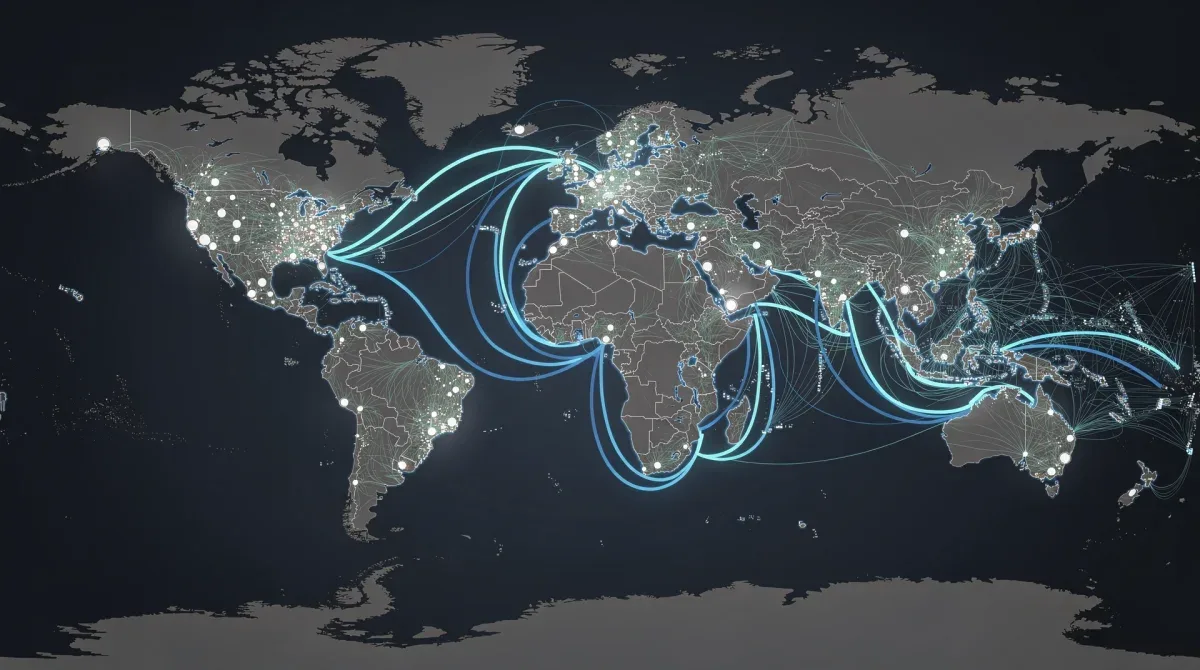
The impact on global supply chains by 2026 will be characterized by a paradigm shift towards resilience and redundancy. While this may lead to higher initial costs and potentially slower response times for some products, the long-term benefit is a more secure and stable flow of goods across the world. Businesses and governments are now keenly aware of the vulnerabilities inherent in highly centralized systems and are actively working towards creating a more distributed and adaptable global trade network.
Future of Transatlantic Alliances in a Volatile World
The Red Sea trade disruption serves as a stark reminder of the interconnectedness of global security and economic stability, particularly for the future of US transatlantic alliances. By 2026, these alliances will need to demonstrate enhanced adaptability and a unified strategic vision to navigate an increasingly volatile world. The crisis has highlighted the need for continuous dialogue, shared intelligence, and coordinated action, not just in military responses but also in economic and diplomatic spheres.
The challenges in the Red Sea underscore that regional conflicts can have global repercussions, directly affecting the economic well-being and security interests of distant allies. Therefore, the future strength of transatlantic alliances will depend on their ability to develop comprehensive strategies that address both immediate threats and underlying geopolitical instabilities. This requires a proactive approach to crisis management and a willingness to invest in collective security infrastructure.
Strengthening Cooperation and Shared Vision
To ensure their continued relevance and effectiveness, US transatlantic alliances must evolve beyond traditional defense pacts to encompass broader areas of cooperation. This includes joint efforts in cyber security, climate resilience, and, crucially, maritime security across all critical chokepoints. A shared understanding of emerging threats and a unified vision for global stability will be paramount.
- Enhanced Maritime Security Cooperation: Joint patrols and intelligence sharing in critical waterways.
- Economic Resilience Strategies: Collaborating on supply chain diversification and risk mitigation.
- Diplomatic Alignment: Presenting a united front in international forums to address geopolitical challenges.
- Technological Collaboration: Joint development and deployment of advanced defense technologies.
The Red Sea crisis acts as a crucible, testing the mettle of existing alliances and forcing a re-evaluation of their foundational principles. The ability of the US and its European partners to learn from this disruption, adapt their strategies, and reinforce their collective resolve will be instrumental in shaping the global security landscape for years to come. The future of transatlantic alliances in a volatile world will be defined by their capacity for unity, flexibility, and a shared commitment to safeguarding international peace and prosperity.
Navigating the New Normal: Strategies for Resilience
As the global community grapples with the protracted implications of the Red Sea trade disruption, businesses and governments are actively formulating strategies to navigate what is rapidly becoming a new normal in international trade. The era of predictable, highly optimized supply chains has given way to one demanding resilience, adaptability, and a proactive approach to risk management. This shift requires a fundamental re-evaluation of long-held assumptions about global logistics and geopolitical stability.
For businesses, this means investing in robust contingency plans, diversifying transportation routes, and building stronger, more localized supply networks. Governments, on the other hand, are focusing on enhancing maritime security, fostering international cooperation, and supporting domestic industries to reduce external dependencies. The overarching goal is to create systems that can withstand future shocks, whether they originate from geopolitical conflicts, natural disasters, or pandemics.
Key Strategies for Businesses and Governments
Developing resilience in the face of ongoing disruptions requires a multi-pronged approach involving both private and public sectors. Companies are exploring innovative solutions, while governments are implementing policies to support these transitions and safeguard national interests.
- Route Diversification: Utilizing multiple shipping routes and modes of transport.
- Regionalization of Supply Chains: Shifting production closer to consumer markets.
- Digital Transformation: Leveraging data analytics and AI for predictive risk assessment.
- Government Support: Policies promoting domestic production and strategic reserves.
- International Collaboration: Strengthening alliances for collective security and trade stability.
Ultimately, navigating this new normal involves a continuous process of learning and adaptation. The Red Sea disruption has served as a powerful lesson in the fragility of global interconnectedness and the imperative for resilience. By implementing strategic changes and fostering greater collaboration, both within and across borders, the world can build more robust systems capable of enduring the inevitable challenges of an unpredictable future. The strategies adopted today will define the landscape of global trade and security for decades to come, underscoring the critical importance of proactive and collaborative action.
| Key Point | Brief Description |
|---|---|
| 18% Shipping Reroute | A significant portion of global maritime trade is now avoiding the Red Sea, opting for the longer Cape of Good Hope route. |
| Economic Impact | Increased shipping costs, longer transit times, and supply chain strains are leading to higher consumer prices and inflation. |
| US Transatlantic Alliances | The crisis tests alliance cohesion, requiring coordinated military and diplomatic responses to secure vital trade routes. |
| Supply Chain Resilience | Businesses are adapting by diversifying sourcing, nearshoring, and building inventory buffers to mitigate future disruptions. |
Frequently Asked Questions About the Red Sea Disruption
What is the Red Sea trade disruption?▼The Red Sea trade disruption refers to the ongoing security challenges in the Red Sea and Gulf of Aden, primarily due to attacks on commercial vessels. This has forced many shipping companies to reroute their vessels, significantly impacting global maritime trade flows and increasing transit times and costs.
How does the 18% shipping reroute impact global trade?▼The 18% reroute means a substantial portion of global cargo now travels around the Cape of Good Hope, adding weeks to voyages. This increases fuel consumption, insurance premiums, and operational expenses, leading to higher prices for goods, supply chain delays, and potential inflationary pressures worldwide.
What are the implications for US transatlantic alliances by 2026?▼By 2026, the disruption will test the cohesion and coordination of US transatlantic alliances. It necessitates a unified approach to maritime security, burden-sharing in naval deployments, and diplomatic efforts to stabilize the region, potentially reshaping strategic partnerships and defense priorities.
How are supply chains adapting to the Red Sea crisis?▼Supply chains are adapting by seeking greater resilience. This includes diversifying sourcing locations, exploring nearshoring or friend-shoring strategies, increasing inventory buffers, and investing in advanced logistics technologies. The focus is shifting from pure efficiency to mitigating risks and ensuring continuity of supply.
What measures are being taken to secure the Red Sea?▼To secure the Red Sea, the US and its allies have deployed naval assets and formed multinational task forces, such as Operation Prosperity Guardian. These efforts aim to deter attacks, provide escort to commercial vessels, and enhance intelligence sharing, alongside diplomatic initiatives to de-escalate regional tensions and promote stability.
Conclusion
The Red Sea trade disruption represents a critical juncture for global commerce and international relations, particularly concerning the strategic 18% shipping reroute impact on US transatlantic alliances by 2026. This complex challenge underscores the fragility of global supply chains and the imperative for robust international cooperation. As businesses and governments adapt to this new reality, the emphasis on resilience, diversified strategies, and strengthened alliances will define the future of global trade and security, requiring continuous vigilance and collaborative action to safeguard economic stability and geopolitical harmony.
