Red Sea Conflict Reroutes 45% Cargo by 2026: Global Impact
The ongoing Red Sea conflict is projected to reroute 45% of commercial cargo away from strategic maritime chokepoints by 2026, fundamentally reshaping global supply chain dynamics and increasing transit times and costs.
The escalating situation in the Red Sea is dramatically altering global trade, with projections indicating that by 2026, an astounding Red Sea cargo rerouting of 45% of commercial cargo will have shifted away from its traditional strategic maritime chokepoints. This significant redirection poses profound implications for businesses, consumers, and geopolitical stability worldwide.
Understanding the Red Sea Conflict's Maritime Impact
The Red Sea, a vital artery for global commerce, has become a flashpoint due to ongoing geopolitical tensions. This critical waterway, connecting the Mediterranean Sea via the Suez Canal to the Indian Ocean, facilitates an immense volume of international trade, making any disruption here ripple across continents.
The current conflict has transformed this crucial passage into a high-risk zone, compelling shipping companies to seek alternative, often longer, routes. The economic and logistical ramifications of these diversions are substantial, affecting everything from energy prices to consumer goods availability.
The Suez Canal's Strategic Importance
The Suez Canal is more than just a shortcut; it's a linchpin of global trade. By connecting Europe and Asia without requiring ships to navigate around Africa, it dramatically reduces transit times and fuel costs. Its strategic value cannot be overstated, particularly for containerized cargo and energy shipments.
- Reduced Transit Times: Saves weeks compared to the Cape of Good Hope route.
- Lower Fuel Costs: Shorter distances mean less fuel consumption.
- Critical for East-West Trade: Essential for goods moving between Asia and Europe.
- Energy Flow: A major conduit for oil and natural gas shipments.
The shift away from this chokepoint underscores the severity of the security threats. Shipping lines, prioritizing the safety of their crews and cargo, are making difficult decisions that reshape established maritime logistics. This rerouting isn't merely a temporary adjustment; it's catalyzing a fundamental re-evaluation of global shipping strategies.
The Scale of Rerouting: 45% by 2026
The projection that 45% of commercial cargo will be rerouted by 2026 is a staggering figure, highlighting an unprecedented shift in global maritime trade. This isn't just a minor adjustment; it signifies a massive overhaul of shipping networks that have been optimized over decades. Such a large-scale redirection will inevitably lead to significant operational challenges and increased costs across the board.
This percentage reflects a cumulative impact, factoring in both immediate diversions and long-term strategic adjustments by companies seeking more predictable and secure routes. Businesses are weighing the risks of transit through conflict zones against the increased time and expense of longer journeys, with many opting for the latter to ensure supply chain integrity.
Key Alternative Routes and Their Challenges
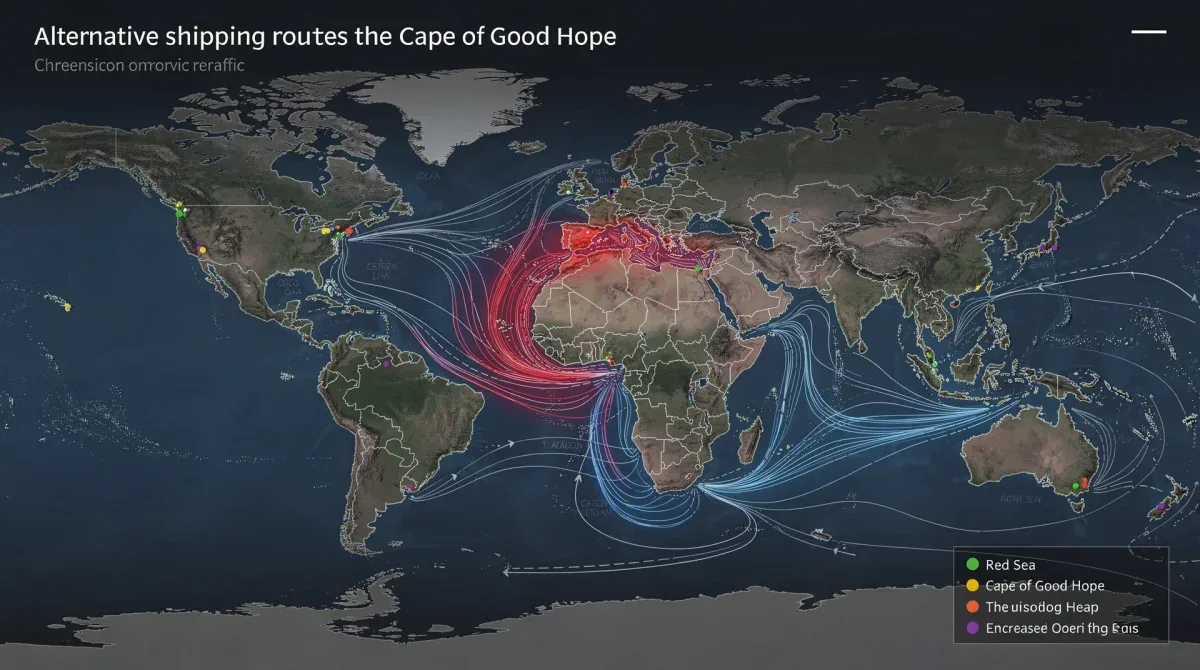
The primary alternative route involves circumnavigating the Cape of Good Hope, adding thousands of nautical miles and several weeks to voyages between Asia and Europe. This extended journey brings its own set of challenges, from increased fuel consumption to higher insurance premiums and greater exposure to adverse weather conditions.
- Cape of Good Hope: Adds 10-15 days to transit, significant fuel increase.
- Panama Canal (Limited): Capacity constraints and drought issues limit its viability for large-scale rerouting.
- Land Bridges (Emerging): Potential, but currently not scalable for oceanic cargo volumes.
The decision to reroute is not taken lightly, as it impacts delivery schedules, inventory management, and ultimately, consumer prices. Companies are actively exploring all viable alternatives, but none offer the efficiency and cost-effectiveness of the Suez Canal under peaceful conditions. This forces a re-evaluation of just-in-time inventory models and encourages a move towards greater supply chain resilience.
Economic Repercussions on Global Supply Chains
The economic fallout from the Red Sea rerouting is multifaceted, impacting every stage of the supply chain from production to consumption. Longer transit times mean higher operational costs for shipping companies, which are then passed on to importers and, eventually, to consumers. This inflationary pressure is a significant concern for global economies already grappling with economic uncertainties.
Furthermore, the increased demand for vessels on longer routes can lead to a shortage of available ships and containers, driving up freight rates. This scarcity can exacerbate delays and create bottlenecks at ports, further disrupting the flow of goods. Businesses reliant on precise delivery schedules are particularly vulnerable to these new challenges.
Impact on Specific Industries
Certain industries are more exposed to these disruptions than others. Manufacturing sectors with complex, global supply chains, such as automotive and electronics, face significant challenges in sourcing components and delivering finished products. The energy sector, heavily reliant on Red Sea transit for oil and gas, also faces volatility.
- Automotive: Delays in parts delivery disrupt production lines.
- Electronics: Increased lead times for components and finished goods.
- Retail: Higher shipping costs translate to higher consumer prices.
- Energy: Volatility in oil and gas markets due to supply route uncertainties.
The extended delivery times also necessitate adjustments in inventory management, potentially leading to increased warehousing costs and the need for larger safety stocks. This shift away from lean inventory practices represents an additional financial burden for businesses attempting to mitigate the risks associated with unpredictable shipping schedules. The ripple effect of these costs is expected to be felt widely, influencing everything from raw material prices to the final cost of goods on store shelves.

Geopolitical Shifts and Regional Stability
The Red Sea conflict is not just a commercial issue; it's a significant geopolitical event with far-reaching implications for regional and global stability. The heightened military presence in the area, coupled with ongoing attacks, underscores the fragility of international maritime security. This situation compels nations to reassess their strategic interests and alliances in critical waterways.
The conflict also highlights the vulnerabilities inherent in relying on single chokepoints for a substantial portion of global trade. Nations are increasingly recognizing the need for diversified trade routes and enhanced naval capabilities to protect their commercial interests. This could lead to a reconfiguration of naval deployments and greater international cooperation on maritime security.
The Role of International Diplomacy
International diplomatic efforts are crucial in de-escalating tensions and finding a sustainable resolution to the conflict. The stakes are incredibly high, as continued instability in the Red Sea could lead to broader regional conflicts and further destabilize global trade. Various international bodies and nations are engaged in complex negotiations to secure safe passage and restore normalcy.
- UN Security Council: Addressing threats to international peace and security.
- Regional Alliances: Efforts by neighboring countries to stabilize the area.
- Naval Coalitions: Joint operations by international navies to protect shipping.
The long-term impact on regional stability is a major concern. Continued conflict could deter investment, hinder economic development, and exacerbate humanitarian crises in affected areas. The world watches closely, understanding that a resolution in the Red Sea is not just about shipping but about the broader fabric of international relations and economic interdependence.
Technological Innovations and Future Maritime Strategies
In response to the Red Sea crisis and other geopolitical disruptions, the maritime industry is accelerating its adoption of technological innovations and re-evaluating future strategies. The need for greater efficiency, transparency, and resilience in supply chains has never been more apparent. Digitalization, automation, and advanced analytics are becoming indispensable tools for navigating complex global trade environments.
Companies are investing in real-time tracking systems, predictive analytics for route optimization, and enhanced cybersecurity measures to protect sensitive data. The goal is to create more agile and adaptable supply chains that can quickly respond to unforeseen challenges, minimizing disruptions and maintaining continuity of operations.
Emerging Technologies in Shipping
Advanced technologies are playing a pivotal role in shaping the future of maritime logistics. From AI-driven route planning to blockchain for secure documentation, these innovations aim to streamline operations and enhance decision-making. The crisis acts as a catalyst for faster adoption of solutions that might otherwise have taken years to implement.
- AI-Powered Route Optimization: Analyzing real-time data for safer, more efficient paths.
- Blockchain for Supply Chain Transparency: Securing and tracking goods from origin to destination.
- Autonomous Vessels: Long-term potential for reducing human risk in dangerous zones.
- Satellite Monitoring: Enhanced surveillance for maritime security and traffic management.
Furthermore, there is a growing emphasis on green shipping technologies. Longer routes mean increased fuel consumption and emissions, prompting a renewed focus on sustainable shipping practices. This includes exploring alternative fuels, optimizing vessel design for energy efficiency, and investing in carbon capture technologies to mitigate environmental impact. The drive for resilience now intertwines with the imperative for sustainability.
Preparing for a Transformed Global Trade Landscape
The rerouting of 45% of commercial cargo by 2026 signals a fundamental transformation of the global trade landscape. This isn't a temporary blip but a significant structural shift that requires long-term strategic planning from governments, businesses, and logistics providers. Adapting to this new reality involves not only mitigating immediate risks but also building more robust and diversified supply chains for the future.
Companies are being forced to rethink their sourcing strategies, potentially diversifying their manufacturing bases and supplier networks to reduce reliance on single regions or shipping routes. This could lead to a partial reshoring or nearshoring of production, prioritizing resilience over purely cost-driven decisions. The emphasis is now on creating redundant systems and alternative pathways to ensure continuity.
Strategies for Resilience and Adaptation
Building resilience in this new environment involves a multi-pronged approach. It includes strengthening port infrastructure at alternative hubs, investing in multimodal transportation solutions, and fostering greater collaboration across the supply chain ecosystem. Proactive measures are essential to navigate the complexities of a fragmented and unpredictable global trade network.
- Diversified Sourcing: Reducing reliance on single suppliers or geographic regions.
- Enhanced Port Infrastructure: Upgrading alternative ports to handle increased volumes.
- Multimodal Transport: Integrating sea, rail, and road to optimize cargo flow.
- Strategic Stockpiling: Holding larger inventories of critical goods to buffer against delays.
The long-term implications extend beyond logistics, influencing international trade agreements, foreign policy, and economic development strategies. Nations will need to work collaboratively to establish new norms for maritime security and to develop infrastructure that supports a more distributed and resilient global trade system. The era of predictable, highly optimized global supply chains, heavily reliant on a few key chokepoints, is giving way to a more complex and adaptive future.
| Key Impact | Brief Description |
|---|---|
| Cargo Rerouting Scale | 45% of commercial cargo projected to reroute by 2026, avoiding Red Sea chokepoints. |
| Economic Costs | Increased transit times, fuel consumption, insurance, and freight rates lead to higher consumer prices. |
| Supply Chain Disruption | Delays, port congestion, and inventory management challenges affect various industries globally. |
| Geopolitical Repercussions | Heightened regional instability, reassessment of maritime security, and diplomatic efforts. |
Frequently Asked Questions About Red Sea Cargo Rerouting
Why is the Red Sea conflict causing such significant rerouting?▼The Red Sea is a critical maritime chokepoint, and ongoing attacks by hostile actors have made it too risky for many commercial vessels. Shipping companies are prioritizing the safety of their crew and cargo, opting for longer, safer routes around the Cape of Good Hope to avoid potential dangers and ensure delivery.
What are the main economic consequences of this rerouting?▼The rerouting leads to increased shipping costs due to longer transit times, higher fuel consumption, and elevated insurance premiums. These additional expenses are passed down the supply chain, contributing to higher prices for goods and potentially fueling inflation globally, impacting consumers and businesses alike.
Which industries are most affected by the Red Sea cargo rerouting?▼Industries with complex, global supply chains are particularly vulnerable. This includes sectors like automotive, electronics, and retail, which rely on precise delivery schedules and efficient component sourcing. The energy sector also faces volatility due to disruptions in oil and gas transit routes through the Red Sea.
What alternative routes are commercial ships using instead of the Red Sea?▼The primary alternative is circumnavigating the Cape of Good Hope, which adds thousands of miles and weeks to voyages between Asia and Europe. While the Panama Canal is another option, its capacity is limited, and it faces its own challenges, such as drought-induced restrictions, making it less viable for large-scale rerouting.
How are companies adapting to these significant changes in maritime trade?▼Companies are adapting by diversifying their sourcing, investing in advanced logistics technologies like AI-driven route optimization, and enhancing their supply chain resilience. This includes exploring multimodal transport options, strengthening port infrastructure at alternative hubs, and in some cases, considering strategic stockpiling of critical goods.
Conclusion
The projection that 45% of commercial cargo will be rerouted away from strategic Red Sea chokepoints by 2026 signifies a monumental shift in global maritime trade. This ongoing conflict is not merely a regional issue but a powerful catalyst reshaping global supply chains, economic landscapes, and geopolitical strategies. The repercussions, from increased costs and transit times to heightened demands for supply chain resilience and technological innovation, underscore the critical need for adaptability and international cooperation in navigating a new era of global commerce.
