Lobito Corridor Expansion: US-China Mineral Competition
The 2026 expansion of the Lobito Corridor will significantly alter the landscape of US-China strategic mineral competition in Africa, providing a vital new route for critical resources and reshaping global economic influence.
The year 2026 marks a pivotal moment in global geopolitics and resource allocation, as the expanded Lobito Corridor expansion Africa promises to redefine the strategic mineral competition between the United States and China on the African continent. This ambitious infrastructure project is more than just a railway; it's a new frontier in the quest for critical minerals, poised to reshape economic alliances and power dynamics.
Understanding the Lobito Corridor's Strategic Importance
The Lobito Corridor, originating from the Angolan port of Lobito and extending deep into the mineral-rich regions of the Democratic Republic of Congo (DRC) and Zambia, represents a critical artery for global trade. Its expansion by 2026 is not merely an upgrade; it's a strategic enhancement designed to unlock vast reserves of cobalt, copper, and other essential minerals.
For decades, the logistical challenges of transporting these resources from landlocked Central African nations to global markets have been immense. The existing infrastructure has often been insufficient, leading to bottlenecks and increased costs. The revitalized corridor aims to mitigate these issues, offering a more efficient and cost-effective pathway.
Historical context and recent developments
The original Benguela Railway, the precursor to the Lobito Corridor, has a long history, dating back to colonial times. However, decades of conflict and underinvestment left much of it in disrepair. Recent years have seen renewed interest and significant investment, particularly from Western partners, signaling a shift in geopolitical focus.
- Initial construction began in the early 20th century, primarily for mineral export.
- Post-independence conflicts severely disrupted operations and caused extensive damage.
- Recent revitalization efforts are backed by a consortium involving the US, EU, and African development banks.
The upcoming expansion is distinguished by its scale and the concerted international effort behind it, moving beyond mere repair to a comprehensive modernization. This ensures the corridor can handle increased freight volumes and integrate with broader economic development plans for the region.
In conclusion, the Lobito Corridor's strategic importance cannot be overstated. It's a gateway for critical minerals, a facilitator of regional economic integration, and, crucially, a new battleground for global powers vying for influence in Africa.
The US Strategy: Diversifying Critical Mineral Supply Chains
For the United States, the expansion of the Lobito Corridor offers a compelling opportunity to diversify its critical mineral supply chains, a goal that has become increasingly urgent in recent years. Reliance on a single source, particularly China, for vital components like cobalt and copper, poses significant economic and national security risks.
The US government, through initiatives like the Partnership for Global Infrastructure and Investment (PGII), has committed substantial resources to supporting the corridor's development. This is a clear signal of Washington's intent to foster alternative supply routes and reduce its vulnerability to geopolitical disruptions.
Key objectives of US engagement
The American approach to the Lobito Corridor is multifaceted, encompassing economic, strategic, and diplomatic objectives. It's about more than just securing minerals; it's about building lasting partnerships and promoting responsible resource governance.
- Reducing China's dominance: Directly challenging China's near-monopoly on processing and refining certain strategic minerals.
- Promoting good governance: Encouraging transparency and accountability in the mining sector to combat corruption and improve labor practices.
- Fostering regional stability: Investing in infrastructure that supports economic growth and reduces instability in Central Africa.
By investing in the Lobito Corridor, the US aims to create a more resilient and ethical supply chain for critical minerals. This includes supporting local economies and ensuring that the benefits of mineral extraction are shared more equitably within the African nations involved.
The US strategy recognizes that long-term mineral security requires not just access to resources, but also stable and predictable relationships with producing countries. The Lobito Corridor serves as a tangible manifestation of this broader strategic vision.

China's Enduring Influence and Counter-Strategies
China has long been a dominant player in Africa's mineral landscape, investing heavily in mining operations and infrastructure across the continent. While the Lobito Corridor expansion is primarily backed by Western interests, China's established presence and strategic investments mean it will remain a formidable competitor.
Beijing's approach has often involved direct investment in mines, long-term off-take agreements, and the construction of supporting infrastructure, such as roads and power plants, often with fewer conditionalities than Western lenders. This has given China a significant head start in securing access to critical minerals.
China's adaptive responses to new competition
- Leveraging existing infrastructure: China has invested in other corridors and ports in Africa, which it can further develop.
- Deepening bilateral ties: Strengthening relationships with African governments through continued aid, trade, and investment.
- Focusing on processing capabilities: Maintaining and expanding its global leadership in mineral processing and refining, regardless of the origin of raw materials.
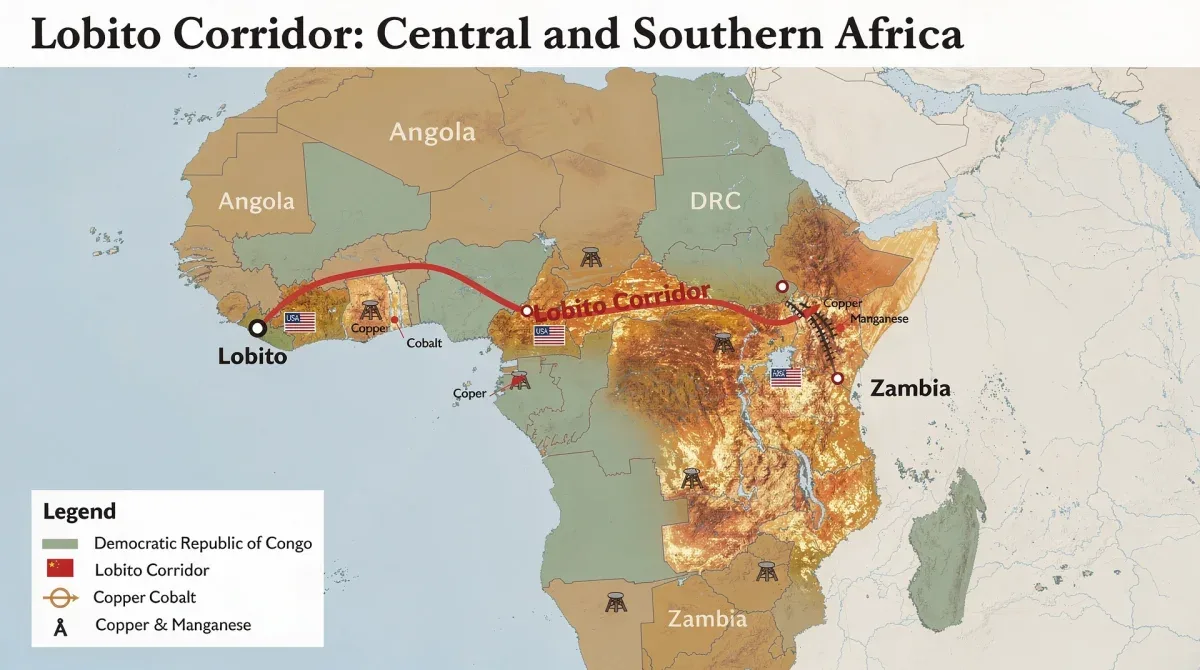
The Lobito Corridor expansion could spur China to intensify its efforts in other parts of Africa, or to seek new partnerships that complement its existing network. This dynamic competition could ultimately benefit African nations by providing them with more options and leverage.
In summary, while the Lobito Corridor presents a challenge to China's mineral dominance, Beijing's extensive footprint and adaptive strategies suggest a continued, albeit evolving, presence in the African mineral sector.
Impact on African Nations: Opportunities and Challenges
For Angola, the DRC, and Zambia, the countries directly impacted by the Lobito Corridor, the expansion brings a mix of significant opportunities and potential challenges. The promise of enhanced economic development, job creation, and improved trade infrastructure is immense, but so are the complexities of managing increased international attention and resource governance.
The corridor's efficiency gains are expected to reduce transportation costs for mineral exports, making these nations' resources more competitive on the global market. This could translate into higher revenues and greater fiscal stability.
Economic benefits and development prospects
- Job creation: Construction, logistics, and related industries will generate employment opportunities.
- Increased revenue: More efficient export routes can lead to higher commodity prices and government revenues.
- Regional integration: Enhanced connectivity fosters greater trade and cooperation among participating nations.
However, these opportunities come with the responsibility of ensuring that the benefits are widely distributed and contribute to sustainable development. Issues of transparency, environmental protection, and local community engagement remain paramount.
The challenge for African governments will be to negotiate effectively with international partners, ensuring that their national interests are prioritized and that the corridor serves as a catalyst for broad-based economic growth, not just resource extraction.
Geopolitical Implications and Shifting Alliances
The 2026 expansion of the Lobito Corridor is not just an economic project; it's a significant geopolitical event that will inevitably lead to shifting alliances and redefine strategic partnerships in Africa. The US and its allies are actively seeking to strengthen their ties with African nations, offering an alternative to China's established influence.
This intensified competition could empower African countries to exercise greater agency in their foreign policy and economic development, as they find themselves courted by multiple global powers.
The rise of multipolar competition
- Increased bargaining power: African nations can leverage competition to secure better investment terms and development packages.
- Diversification of partners: The ability to choose from a wider range of international partners for infrastructure and resource development.
- Potential for regional blocs: Strengthened regional cooperation driven by shared infrastructure projects and economic interests.

However, this also means navigating complex diplomatic terrain, balancing the interests of competing global powers while safeguarding national sovereignty and development goals. The choices made by African nations in the coming years will have lasting implications for their future trajectory.
Ultimately, the Lobito Corridor's geopolitical impact will be measured not only by who controls the minerals, but by how it reshapes the global balance of power and the autonomy of African states.
Future Outlook: A New Era for African Resource Governance
Looking beyond 2026, the expanded Lobito Corridor heralds a new era for African resource governance, characterized by increased international scrutiny, intensified competition, and a greater emphasis on sustainable and ethical practices. The stakes are incredibly high, not just for the US and China, but for the global economy and the future of critical mineral supply.
The corridor's success will depend on effective collaboration among all stakeholders, including African governments, international development partners, and private sector investors. It will also serve as a blueprint for future infrastructure projects across the continent.
Challenges and opportunities in the coming decade
- Sustainable mining practices: Pressure to adopt environmentally responsible and socially equitable mining operations.
- Technological innovation: Integration of advanced technologies to optimize logistics and resource management.
- Regional economic integration: Further development of interconnected infrastructure across Central and Southern Africa.
The Lobito Corridor could become a model for how large-scale infrastructure projects can be developed in Africa, balancing geopolitical interests with local development needs. Its influence will extend far beyond the immediate mineral trade, impacting diplomatic relations, investment patterns, and the very fabric of regional economies.
The future of African resource governance, shaped by projects like the Lobito Corridor, will be a testament to the continent's growing strategic importance and its capacity to drive global economic shifts.
| Key Point | Brief Description |
|---|---|
| Corridor Expansion | By 2026, the Lobito Corridor will significantly enhance mineral export capabilities from DRC and Zambia. |
| US Strategy | The US aims to diversify critical mineral supply chains and reduce reliance on China through this project. |
| China's Response | China will adapt by leveraging existing networks and deepening bilateral ties to maintain its influence. |
| African Impact | African nations gain economic opportunities but face challenges in governance and equitable benefit distribution. |
Frequently Asked Questions About the Lobito Corridor
What is the primary purpose of the Lobito Corridor expansion?▼The primary purpose is to create a more efficient and cost-effective transportation route for strategic minerals, like copper and cobalt, from the Democratic Republic of Congo and Zambia to the Angolan port of Lobito, thereby facilitating their export to global markets. This also aims to boost regional economic development.
How does the US benefit from the Lobito Corridor expansion?▼The US benefits by diversifying its critical mineral supply chains, reducing its reliance on single sources, particularly China. It also strengthens strategic partnerships with African nations, promotes good governance, and supports economic stability in a geopolitically important region.
What is China's current involvement in African mineral resources?▼China has extensive investments in African mining operations and infrastructure, securing long-term off-take agreements for various strategic minerals. It holds a dominant position in the processing and refining of many critical resources, making it a key player in the global supply chain.
What challenges do African nations face with this corridor's development?▼African nations face challenges in ensuring equitable distribution of benefits, managing environmental impacts, preventing corruption, and navigating the complex geopolitical interests of competing global powers. Effective governance and strong negotiation skills are crucial for maximizing positive outcomes.
How will the Lobito Corridor impact global supply chains for critical minerals?▼The corridor will significantly enhance the resilience and diversity of global critical mineral supply chains by providing an alternative, more efficient route. This could reduce price volatility, improve market access for African producers, and lessen the impact of potential disruptions in existing supply lines.
Conclusion
The 2026 expansion of the Lobito Corridor is far more than an infrastructure project; it is a profound geopolitical development poised to redefine the strategic mineral competition between the United States and China in Africa. By offering a vital new artery for critical resources, it will not only reshape global supply chains but also empower African nations, foster new alliances, and usher in a new era of resource governance. The world watches as this crucial corridor unlocks the continent's potential and recalibrates international power dynamics.
