Europe's 30% Reliance on US LNG Reshapes Global Diplomacy
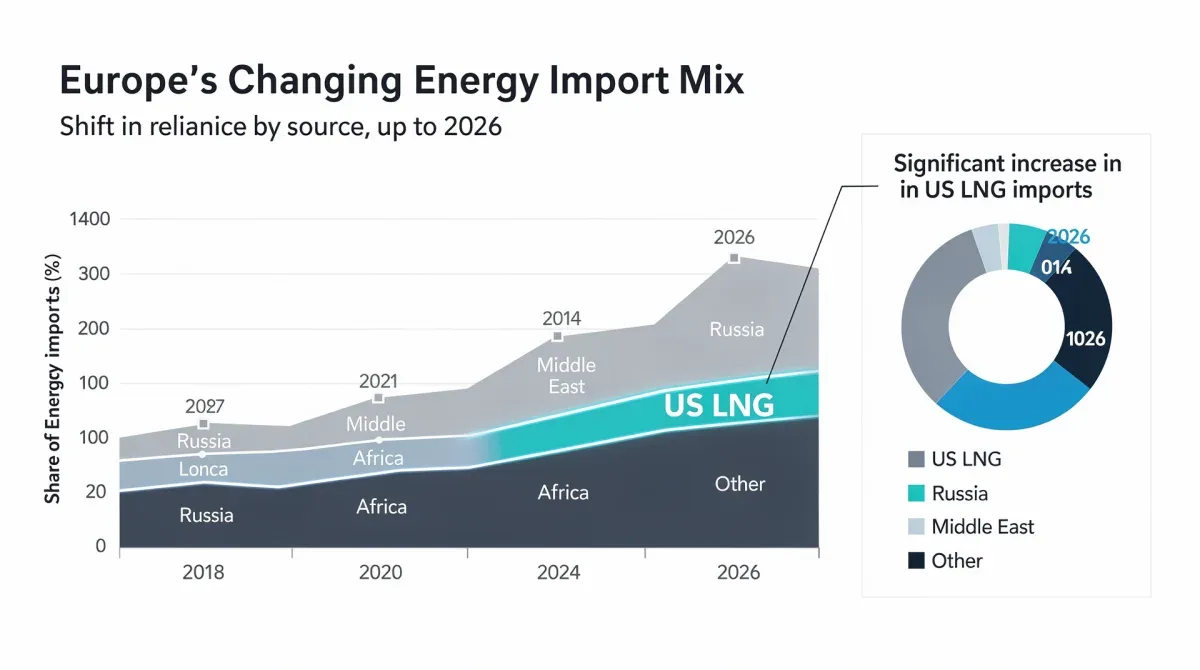
Europe's projected 30% reliance on US LNG by 2026 is a critical pivot in global energy strategy, necessitating a recalibration of international diplomatic frameworks and economic partnerships.
The landscape of global energy is undergoing a profound transformation, with Cross-Border Energy Realignment: Why Europe’s 30% Reliance on US LNG Reshapes Global Diplomacy in 2026 emerging as a central theme. This significant shift is not merely an economic transaction; it is a geopolitical earthquake, redefining alliances, challenging established power structures, and setting the stage for a new era of international relations. As Europe moves away from traditional energy suppliers, its burgeoning dependence on U.S. liquefied natural gas (LNG) signals a strategic pivot with far-reaching implications for global diplomacy, economic stability, and energy security.
The genesis of Europe’s LNG pivot
Europe's journey toward a substantial reliance on US LNG is rooted in a complex interplay of geopolitical shifts and strategic energy decisions. Historically, the continent's energy security was heavily tied to pipeline gas from specific Eastern sources, a dependency that proved increasingly vulnerable to political instability and supply disruptions. The drive for diversification became not just an economic imperative but a matter of national and regional sovereignty, pushing European nations to explore alternative energy sources and suppliers.
This strategic reorientation accelerated dramatically in the early 2020s, prompted by a confluence of factors including heightened geopolitical tensions and a renewed commitment to energy independence. The United States, with its booming shale gas production and expanding LNG export capabilities, emerged as a viable and increasingly attractive alternative. The ability to ship natural gas across the Atlantic in liquefied form offered flexibility and a means to bypass traditional pipeline vulnerabilities, presenting a tangible path towards enhanced energy security for Europe.
Geopolitical catalysts for diversification
Several key events underscored the urgent need for Europe to diversify its energy portfolio. These catalysts highlighted the inherent risks of over-reliance on a single supplier and spurred a collective European effort to seek new partnerships. The underlying motivation was to reduce leverage points that could be exploited for political ends, ensuring a more stable and predictable energy supply for industries and households across the continent.
- Supply disruptions: Recurring instances of supply interruptions from traditional sources emphasized the precariousness of Europe's energy framework.
- Political leverage: The use of energy supply as a political tool by certain nations underscored the need for strategic autonomy.
- Market volatility: Fluctuations in global energy markets amplified the economic risks associated with concentrated supply chains.
The shift towards LNG, particularly from the US, represents a conscious decision by European policymakers to mitigate these risks. It's a move away from geographically constrained pipeline networks towards a more flexible, maritime-based supply chain. This strategic pivot is not without its own challenges, but it fundamentally alters the calculus of European energy security, fostering a new dynamic in transatlantic relations and global energy markets.
In conclusion, Europe's pivot to US LNG is a direct response to historical vulnerabilities and evolving geopolitical realities. It marks a significant departure from past energy strategies, laying the groundwork for a more diversified and resilient energy future, albeit one with new interdependencies and diplomatic considerations.

Economic implications for both continents
The burgeoning 30% reliance of Europe on US LNG by 2026 carries profound economic implications for both continents, reshaping trade balances, investment flows, and industrial competitiveness. For the United States, this increased demand translates into a substantial boost for its domestic energy sector, driving further investment in LNG infrastructure, job creation, and export revenues. The U.S. is solidifying its position as a global energy powerhouse, with its LNG exports becoming a critical component of its trade policy.
On the European side, securing a diversified energy supply from a stable partner like the U.S. offers a degree of energy security that was previously lacking. This reliability can help stabilize energy prices, reduce market volatility, and provide a more predictable environment for industrial planning and investment. However, it also means a significant financial outlay for Europe, as LNG generally comes with higher transportation and liquefaction costs compared to pipeline gas, impacting consumer prices and industrial competitiveness.
Investment in infrastructure and trade balances
The shift necessitates considerable investment in LNG import terminals, regasification facilities, and pipeline networks within Europe to handle the increased volumes. These infrastructure projects represent both economic opportunities and financial burdens. Similarly, the US continues to expand its export terminals, requiring massive capital expenditure but promising long-term returns.
- U.S. infrastructure boom: Billions are being invested in new LNG export facilities, creating jobs and stimulating regional economies.
- European import capacity: Expansion and construction of new LNG terminals are crucial for accommodating increased US imports, driving construction and engineering sectors.
- Shifting trade dynamics: The energy trade balance between the US and Europe is significantly altered, with energy becoming a more prominent component of transatlantic commerce.
The economic relationship is becoming more intertwined, moving beyond traditional goods and services to include a vital energy component. This interdependence can foster deeper economic integration but also exposes both regions to each other's economic vulnerabilities. The long-term contracts often associated with LNG supply provide stability but also lock in pricing mechanisms that could be a double-edged sword depending on future global energy market conditions.
In sum, the economic ramifications of Europe's increased reliance on US LNG are extensive. While it bolsters energy security for Europe and provides economic stimulus for the US, it also necessitates significant infrastructure investment and influences energy pricing, thereby shaping the economic landscape of both continents for decades to come.
Reshaping transatlantic relations
The deepening energy ties, particularly Europe's 30% reliance on US LNG by 2026, are fundamentally reshaping the transatlantic relationship. This shift moves beyond traditional security alliances and economic partnerships, embedding a critical energy dimension that strengthens strategic alignment. The shared interest in energy security fosters greater cooperation and coordination on broader geopolitical issues, creating a more robust and interdependent bond between the United States and its European allies.
This enhanced energy partnership provides the U.S. with increased leverage and influence in European affairs, particularly concerning energy policy and security decisions. For Europe, it offers a reliable alternative to previously unstable energy sources, reinforcing its strategic autonomy from other global powers. The dynamic shifts from a purely buyer-seller relationship to a more comprehensive strategic partnership, where energy security is a cornerstone of mutual defense and economic stability.
Strategic alignment and diplomatic leverage
The shared energy agenda facilitates closer dialogue and collaboration on climate policy, technological innovation in energy, and responses to global energy crises. This strategic alignment can lead to more unified diplomatic fronts on various international issues, presenting a stronger collective voice on the global stage.
- Enhanced security dialogue: Energy security becomes a frequent topic in high-level transatlantic discussions, solidifying mutual commitments.
- Unified climate goals: Shared energy transition goals can drive joint initiatives on renewable energy and carbon reduction technologies.
- Coordinated foreign policy: A common energy front can lead to more cohesive responses to geopolitical challenges from rival powers.
However, this reliance also presents potential vulnerabilities. Any disruption to US LNG supply, whether due to domestic policy changes, natural disasters, or geopolitical events, could have significant repercussions for European energy markets. Therefore, while the relationship strengthens, it also necessitates careful management and continuous diplomatic engagement to ensure stability and predictability.
Ultimately, the shift towards US LNG fundamentally alters the nature of the transatlantic bond. It transforms an alliance based primarily on shared values and security interests into one deeply rooted in mutual energy dependence, creating a new framework for strategic cooperation and diplomatic engagement.
Impact on global energy markets and prices
Europe's substantial reliance on US LNG by 2026 will inevitably send ripples across global energy markets, influencing pricing dynamics, supply chains, and competitive landscapes. The diversion of significant LNG volumes from the U.S. to Europe will tighten the global LNG market, potentially increasing prices for other importing nations, particularly those in Asia, which have historically been major buyers of spot LNG cargoes. This creates a more interconnected and competitive global market where regional demands have a more pronounced worldwide impact.
The increased demand from Europe also incentivizes further investment in LNG production and export capacity globally, not just in the U.S. Other potential exporters, seeing the sustained European appetite, may accelerate their own projects, leading to a long-term increase in global LNG supply. This dynamic could eventually lead to a more diversified global supply network, but in the short to medium term, it portends a period of heightened market tension and price volatility.
Price discovery and market competition
The shift will also influence how natural gas prices are discovered globally. With Europe becoming a major destination for flexible LNG cargoes, its gas hubs will gain greater prominence in setting global benchmarks. This could lead to a more integrated global gas market, where regional price differences are arbitraged more efficiently, but also where shocks in one region quickly propagate to others.
- Asian market impact: Increased European demand could push up spot prices for Asian buyers, altering their energy procurement strategies.
- Investment stimulus: Higher prices and sustained demand will encourage new LNG projects in various producing regions, diversifying future supply.
- Global price convergence: Enhanced LNG trade fosters greater interconnection between regional gas markets, leading to more synchronized price movements.
Furthermore, the long-term nature of many LNG contracts between the U.S. and Europe provides a degree of price stability for European buyers but also reduces the amount of LNG available on the spot market, affecting its liquidity and price responsiveness. This complex interplay of factors will necessitate continuous monitoring and strategic adjustments by market participants and policymakers alike.
In conclusion, Europe's growing appetite for US LNG is a game-changer for global energy markets. It promises a more interconnected and competitive landscape, with significant implications for pricing, supply security, and investment decisions worldwide, demanding adaptive strategies from all stakeholders.
Challenges and risks of increased dependency
While Europe's 30% reliance on US LNG offers significant benefits in terms of diversification and energy security, it also introduces a new set of challenges and risks that warrant careful consideration. The primary concern revolves around the potential for a new form of dependency. Shifting from one dominant supplier to another, even a strategic ally, inherently carries vulnerabilities related to supply disruptions, price volatility, and geopolitical leverage.
Any unforeseen events impacting U.S. LNG production or export capabilities—such as extreme weather events, infrastructure failures, or changes in domestic energy policy—could have immediate and severe repercussions for Europe's energy supply. This highlights the importance of maintaining robust emergency response protocols and continuing to diversify within the LNG market itself, rather than solely relying on a single source, even if it is a reliable one.
Potential vulnerabilities and mitigation strategies
Beyond supply security, the long-term financial implications for Europe are also a significant challenge. LNG typically commands a premium over pipeline gas due to the energy-intensive processes of liquefaction and regasification, as well as transportation costs. This could translate into higher energy bills for European consumers and industries, potentially impacting economic competitiveness.
- Supply chain fragility: Reliance on maritime routes makes Europe vulnerable to disruptions from piracy, conflict, or natural disasters.
- Pricing volatility: Exposure to global LNG market fluctuations can lead to unpredictable energy costs for European nations.
- Infrastructure bottlenecks: Insufficient regasification capacity or pipeline networks within Europe could limit the effective distribution of imported LNG.

To mitigate these risks, European nations must continue to invest in domestic renewable energy sources, enhance energy efficiency, and explore other potential LNG suppliers to maintain a truly diversified portfolio. Diplomatic efforts will also be crucial in ensuring stable long-term contracts and fostering transparency in pricing and supply agreements with the U.S.
In conclusion, while US LNG provides a vital lifeline for European energy security, it is imperative to acknowledge and proactively address the inherent challenges and risks of this increased dependency. A balanced approach that combines diversification, infrastructure investment, and robust diplomatic engagement will be key to navigating this new energy landscape successfully.
The future of Europe’s energy mix beyond 2026
Looking beyond 2026, Europe's energy mix will continue to evolve, with its 30% reliance on US LNG serving as a significant, but not exclusive, component. The continent's long-term energy strategy is firmly anchored in decarbonization and the transition to renewable energy sources, driven by ambitious climate targets and the imperative for true energy independence. While natural gas, including LNG, will play a crucial role as a transition fuel, its share in the overall energy mix is expected to gradually decrease as green technologies mature and scale up.
The strategic importance of US LNG in the mid-term provides a necessary bridge as Europe accelerates its investments in wind, solar, hydropower, and emerging technologies like green hydrogen. This dual approach ensures immediate energy security while paving the way for a sustainable and resilient energy future. The diplomatic efforts forged around LNG supply can also extend to cooperation on green energy technologies and climate policy, strengthening transatlantic collaboration on the global energy transition.
Transition to renewables and green technologies
The commitment to renewable energy is unwavering across Europe, with significant policy drives and financial incentives aimed at boosting capacity. This will involve not just expanding existing technologies but also innovating in areas like energy storage, smart grids, and carbon capture utilization and storage (CCUS) to ensure grid stability and reliability.
- Accelerated renewable deployment: Massive investments in offshore wind, solar farms, and other renewable projects are underway across the continent.
- Hydrogen economy: Development of green hydrogen production, transport, and usage infrastructure is a key long-term goal for energy decarbonization.
- Grid modernization: Upgrading and smartening electricity grids are essential to integrate higher shares of intermittent renewable energy sources.
Moreover, the geopolitical lessons learned from past energy dependencies will inform future decisions, emphasizing a diversified and resilient energy strategy. This means not only diversifying energy sources but also cultivating a broad range of international partnerships to avoid over-reliance on any single nation or technology. The experience with US LNG will undoubtedly shape how Europe approaches its next phase of energy transformation.
Ultimately, while US LNG is critical for Europe's energy security in the coming years, it is part of a broader, more ambitious long-term vision. Europe is steadfast in its commitment to a greener, more sustainable energy future, where reliance on fossil fuels, including natural gas, will progressively diminish in favor of a robust and diverse portfolio of renewable energy sources.
Global diplomatic ramifications
The Cross-Border Energy Realignment: Why Europe’s 30% Reliance on US LNG Reshapes Global Diplomacy in 2026 extends its influence far beyond the immediate economic and bilateral implications, creating significant global diplomatic ramifications. This shift fundamentally alters the geopolitical balance of power, particularly concerning traditional energy-producing nations and other major energy consumers. The U.S. gains enhanced strategic importance as a reliable energy supplier, strengthening its position in international forums and negotiations, especially those related to energy security and climate change.
Conversely, nations that historically held significant sway over European energy markets may find their geopolitical leverage diminished. This necessitates a recalibration of their foreign policy strategies and a search for new markets or alternative economic partnerships. The global energy landscape becomes more multipolar, with various suppliers and consumers navigating a more complex web of interdependencies and competitive dynamics. This can lead to new alliances and rivalries, reshaping the contours of global diplomacy.
Redrawing geopolitical maps and alliances
The increased volume of global LNG trade also enhances the strategic importance of maritime shipping lanes and chokepoints, potentially leading to greater international cooperation on maritime security. Nations with strategic access to these routes or with significant naval capabilities could see their influence grow. The shift also impacts the dynamics within international organizations focused on energy, such as the International Energy Agency (IEA), as new players and priorities emerge.
- Shifting influence: Traditional energy exporters may see their diplomatic sway wane as Europe diversifies its sources.
- New strategic partnerships: The need for diverse energy sources could foster new alliances between European nations and emerging LNG producers.
- Maritime security focus: Increased LNG shipping elevates the importance of safe and secure sea lanes, potentially leading to greater naval cooperation.
Furthermore, the environmental dimension of LNG trade will become a more prominent feature in global diplomatic discussions. While natural gas is a cleaner burning fossil fuel than coal, its production and transportation still involve greenhouse gas emissions. This will require careful diplomatic negotiations to balance energy security needs with global climate goals, particularly as Europe pushes for decarbonization.
In conclusion, Europe's pivot to US LNG is a transformative event for global diplomacy. It redraws geopolitical maps, redefines alliances, and sets the stage for a more intricate and interdependent international system where energy security and climate action are inextricably linked to foreign policy.
| Key Point | Brief Description |
|---|---|
| Energy Diversification | Europe's shift from traditional pipeline gas to US LNG enhances energy security and reduces geopolitical vulnerability. |
| Transatlantic Ties | Increased LNG trade strengthens diplomatic and economic bonds between the US and Europe. |
| Global Market Impact | The demand from Europe influences global LNG prices and supply chain dynamics, affecting other importing nations. |
| New Dependencies | Reliance on US LNG introduces new risks related to supply disruptions and price volatility, requiring careful management. |
Frequently asked questions about Europe's energy realignment
Why is Europe increasing its reliance on US LNG?▼Europe is increasing its reliance on US LNG primarily to diversify its energy sources and enhance energy security. This strategic shift aims to reduce historical dependencies on single suppliers, mitigate geopolitical risks, and stabilize energy supply amidst global market uncertainties. US LNG offers a flexible and reliable alternative for the continent.
What are the main economic benefits for the US?▼For the US, increased LNG exports to Europe translate into significant economic benefits. These include a boost to the domestic energy sector, driving investment in new infrastructure, creating jobs, and increasing export revenues. It further solidifies the US's position as a major global energy exporter, impacting its trade balances positively.
How does this affect transatlantic diplomatic relations?▼Europe's reliance on US LNG significantly strengthens transatlantic diplomatic relations. It creates a deeper strategic alignment based on shared energy security interests, fostering greater cooperation on broader geopolitical issues, climate policy, and technological innovation. This interdependence can lead to more unified diplomatic fronts.
What are the potential risks for Europe?▼Despite benefits, Europe faces risks including a new form of dependency on a single supplier. Potential vulnerabilities include supply disruptions due to US domestic policy changes or natural disasters, and price volatility from global market fluctuations. Higher transportation costs for LNG could also impact consumer prices and industrial competitiveness.
What is Europe's long-term energy strategy beyond 2026?▼Beyond 2026, Europe's long-term energy strategy focuses on accelerating decarbonization and transitioning to renewable energy sources. While US LNG serves as a crucial transition fuel, the continent is heavily investing in wind, solar, hydropower, and green hydrogen technologies, aiming for a sustainable and resilient energy future with reduced fossil fuel reliance.
Conclusion
The strategic shift marked by Europe's projected 30% reliance on US LNG by 2026 is a watershed moment in global energy and diplomatic history. It underscores a determined effort by Europe to secure its energy future through diversification, while simultaneously cementing a deeper, more interdependent relationship with the United States. This realignment carries profound economic implications, reshaping trade flows and investment patterns, and fundamentally altering transatlantic relations to include a robust energy dimension. While challenges and potential vulnerabilities exist, the overall trajectory points towards a more secure, though complex, energy landscape for Europe, with significant ripple effects across global energy markets and the broader international diplomatic stage. The journey beyond 2026 will undoubtedly see further evolution, as Europe continues its ambitious pursuit of a sustainable and truly independent energy mix.
