Chip Diplomacy 2026: Geopolitical Impact of 3nm Export Controls
Chip diplomacy in 2026 profoundly reshapes global power dynamics, as new export controls on 3-nanometer semiconductors ignite intense geopolitical repercussions, influencing technological leadership and international relations.
The global technology landscape is undergoing a seismic shift, with chip diplomacy 2026 emerging as a critical determinant of international power. New export controls on advanced 3-nanometer semiconductors are not merely economic policies; they are strategic maneuvers with far-reaching geopolitical repercussions, fundamentally reshaping alliances, rivalries, and the very fabric of global trade. Understanding these dynamics is essential for navigating the complex future.
The Dawn of 3-Nanometer Dominance and Its Strategic Value
The advent of 3-nanometer (3nm) semiconductor technology marks a new frontier in computing power and efficiency. These minuscule components are the brains behind everything from advanced AI systems and quantum computing to next-generation defense applications and high-performance consumer electronics. Their strategic value cannot be overstated, positioning them as the new oil of the 21st century.
Achieving 3nm fabrication requires immense capital investment, highly specialized intellectual property, and a talent pool that is scarce globally. Only a handful of nations and companies possess the capabilities to produce these cutting-edge chips. This concentration of power inevitably leads to geopolitical leverage, as control over this technology translates directly into economic and military advantage.
Technological Supremacy and National Security
The race for technological supremacy is intrinsically linked to national security. Nations that can produce or reliably access 3nm semiconductors gain a significant edge in developing advanced weaponry, intelligence systems, and critical infrastructure. This advantage creates a powerful incentive for states to safeguard their supply chains and restrict access for potential adversaries.
- Military Applications: Enhanced AI in autonomous systems, superior data processing for surveillance, and secure communication networks.
- Economic Competitiveness: Driving innovation in various industries, from automotive to telecommunications, fostering economic growth.
- Critical Infrastructure: Securing energy grids, financial systems, and transportation networks against cyber threats.
The strategic importance of 3nm technology has elevated semiconductors from mere commodities to instruments of national power. This shift has catalyzed proactive government interventions, including subsidies for domestic production and, crucially, the implementation of stringent export controls. The implications are profound, affecting everything from international trade agreements to military doctrines.
Understanding New Export Controls: Mechanisms and Intent
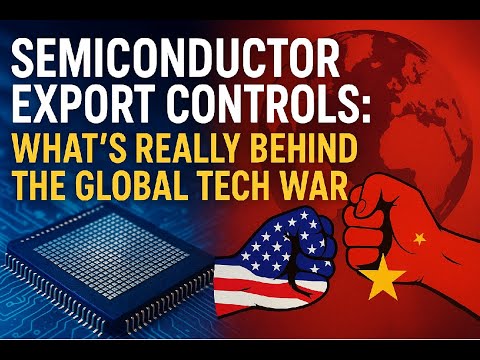
New export controls on 3-nanometer semiconductors are complex, multi-layered regulations designed to restrict the flow of critical technology to specific entities or nations. These controls often target not just the finished chips, but also the sophisticated machinery, software, and expertise required for their production. The intent is clear: to slow down technological advancement in rival countries and maintain a competitive edge.
These mechanisms typically involve licensing requirements, end-user verification, and blacklisting of companies or research institutions. Governments are increasingly collaborating to enforce these controls, forming de facto tech alliances that solidify their collective position while isolating others. This coordinated approach amplifies the impact of individual national policies.
Key Elements of Export Control Frameworks
The frameworks for these controls are continually evolving, adapting to technological advancements and geopolitical shifts. They often include provisions for dual-use technologies, which have both civilian and military applications, making enforcement particularly challenging. The goal is to strike a balance between economic interests and national security concerns, a balance that is often precarious.
- Licensing Requirements: Mandating specific permits for the export of 3nm chips and associated manufacturing equipment.
- Entity Lists: Identifying and restricting trade with specific foreign companies or organizations deemed a national security risk.
- Technology Denial Regimes: Preventing the transfer of intellectual property and technical assistance related to 3nm fabrication.
The implementation of these controls is not without its challenges. Companies face increased compliance burdens, and there is a constant risk of unintended consequences, such as spurring domestic innovation in targeted nations. Despite these hurdles, the strategic imperative to control 3nm technology remains a top priority for leading powers, signaling a new era of tech-driven foreign policy.
Geopolitical Repercussions: Shifting Alliances and Rivalries
The imposition of new export controls on 3nm semiconductors is fundamentally redrawing the global geopolitical map. Nations capable of producing or significantly influencing the supply of these chips are forming tighter alliances, while those excluded or targeted by controls are seeking alternative pathways, often leading to new rivalries. This dynamic creates a complex web of cooperation and confrontation.
Traditional geopolitical alignments are being re-evaluated through the lens of technological access. Countries with robust domestic semiconductor industries, or those with strong ties to such producers, find themselves in a stronger bargaining position. Conversely, nations heavily reliant on external supply chains for advanced chips face heightened vulnerability, prompting urgent efforts to diversify or localize production.

The Formation of Tech Blocs
One of the most significant repercussions is the acceleration of tech bloc formation. Countries sharing similar values and strategic interests are consolidating their supply chains and research efforts, creating exclusive ecosystems for advanced technology. This trend risks fragmenting the global technological landscape, leading to incompatible standards and reduced interoperability.
- Western Alliance Consolidation: Strengthening ties among the US, Europe, Japan, and South Korea to secure 3nm supply chains.
- Emerging Counter-Blocs: Nations targeted by controls investing heavily in indigenous semiconductor capabilities to reduce reliance.
- Neutral Nation Balancing Act: Countries without significant domestic production attempting to maintain access from multiple sources without alienating major powers.
These shifting alliances and emerging rivalries are not confined to the economic sphere; they have profound implications for military cooperation, intelligence sharing, and diplomatic engagements. The struggle for 3nm dominance is becoming a central theme in bilateral and multilateral relations, defining the geopolitical landscape of the mid-2020s and beyond.
Economic Impact: Supply Chains, Innovation, and Market Dynamics
The economic ramifications of 3nm export controls are extensive, touching every aspect of the global economy from supply chain resilience to innovation cycles and market dynamics. These controls disrupt established trade patterns, forcing companies to re-evaluate their manufacturing strategies and source components from politically aligned regions. This leads to increased costs and potential delays.
Innovation, while potentially spurred in certain regions seeking self-sufficiency, may also be stifled globally due to reduced collaboration and restricted access to cutting-edge tools and expertise. Fragmentation of the tech ecosystem could lead to redundant research efforts and slower overall progress. Companies are caught between geopolitical pressures and the need to maintain efficiency and competitiveness.
Disruption of Global Supply Chains
The delicate balance of global semiconductor supply chains, already strained by recent crises, is further destabilized by these new controls. The highly specialized nature of 3nm production means that even small disruptions can have cascading effects across numerous industries. Companies are now looking to diversify their manufacturing bases, often reshoring or nearshoring production to more politically stable regions.
- Increased Production Costs: Diversifying supply chains and building new facilities often comes with higher expenses.
- Market Volatility: Uncertainty around future export policies can lead to unpredictable market fluctuations and investment hesitancy.
- Regionalization of Production: A push towards creating regional semiconductor hubs, potentially leading to less efficient global distribution.
The economic impact extends to consumer markets, with potential price increases for advanced electronics and slower adoption of next-generation technologies. The long-term effects could include a bifurcation of the global tech market, where different regions operate on distinct technological standards and supply chains, further complicating international trade and collaboration.
The Role of International Law and Multilateral Institutions
The escalating chip diplomacy 2026 and export controls pose significant challenges to the existing framework of international law and the efficacy of multilateral institutions. Questions arise regarding the legality of unilateral sanctions, the principles of free trade, and the role of bodies like the World Trade Organization (WTO) in mediating disputes related to high-tech trade.
Many nations view these controls as protectionist measures, potentially violating WTO rules on non-discrimination and market access. However, countries imposing controls often invoke national security clauses, which are broad and subject to interpretation. This creates a legal gray area, leading to protracted disputes and undermining the rules-based international order.

Challenges to Global Governance
Multilateral institutions designed to foster cooperation and regulate international trade find themselves at a crossroads. Their ability to effectively address disputes arising from tech export controls is being tested, with some arguing that existing frameworks are ill-equipped for the complexities of 21st-century technological warfare. New mechanisms or reforms may be necessary to navigate this evolving landscape.
- WTO Disputes: Increased likelihood of member states challenging export controls as unfair trade practices.
- UN and Security Implications: The potential for tech controls to exacerbate international tensions and threaten global stability.
- Need for New Norms: The emergence of a demand for international agreements on responsible technology governance and trade.
The legal and institutional challenges are not merely academic; they have real-world implications for global stability and economic prosperity. The ability of international bodies to adapt and provide a framework for resolving these tech-driven disputes will be crucial in preventing further fragmentation and fostering a more predictable global environment.
Future Outlook: Scenarios for 3nm Geopolitics
Looking ahead, the geopolitical landscape shaped by 3nm export controls in 2026 presents several potential scenarios, each with distinct implications for international relations, economic stability, and technological progress. These scenarios range from a highly fragmented world to one where new forms of cooperation emerge, driven by the sheer necessity of global interdependence.
One possible future sees an acceleration of tech decoupling, where major powers operate largely independent technological ecosystems. This would lead to higher costs, slower innovation, and a diminished global market. Another scenario involves a strategic re-alignment, where nations form more fluid, issue-specific coalitions to manage semiconductor access and development, avoiding rigid blocs.
Potential Pathways and Their Implications
The choices made by key actors in the coming years will largely determine which of these futures materializes. Diplomacy, technological innovation, and economic policy will all play critical roles in shaping the trajectory of 3nm geopolitics. The stakes are incredibly high, as the future of global technological leadership and stability hangs in the balance.
- Continued Decoupling: Leading to two or more distinct tech ecosystems, reduced global trade in advanced components, and fragmented innovation.
- Managed Interdependence: Nations agreeing on specific rules of engagement for critical technologies, allowing for limited, controlled trade and collaboration.
- Technological Arms Race: Intense competition driving rapid, but potentially unsustainable, domestic innovation in multiple countries, increasing global tensions.
Ultimately, the future of 3nm geopolitics will be a testament to the ability of nations to balance their national interests with the undeniable reality of global technological interdependence. The path chosen will have lasting effects on global power dynamics, economic prosperity, and the pace of human innovation for decades to come.
| Key Aspect | Brief Description |
|---|---|
| 3nm Strategic Value | Advanced semiconductors are crucial for AI, defense, and economic competitiveness, making them a key geopolitical asset. |
| Export Control Impact | New controls disrupt global supply chains, fostering tech blocs and intensifying rivalries, aiming to maintain technological advantage. |
| Geopolitical Shifts | Alliances are re-evaluated based on tech access, leading to a fragmented global tech landscape and new diplomatic challenges. |
| Economic Consequences | Increased production costs, market volatility, and a push towards regionalization of semiconductor manufacturing. |
Frequently Asked Questions About Chip Diplomacy in 2026
What are 3-nanometer semiconductors and why are they important?▼3-nanometer (3nm) semiconductors are the most advanced microchips, offering unprecedented computing power and efficiency. They are crucial for artificial intelligence, advanced computing, national defense, and next-generation consumer electronics, making them a cornerstone of modern technological and economic power.
How do export controls on 3nm chips affect global supply chains?▼Export controls disrupt existing global supply chains by restricting the flow of these critical components. This forces companies to diversify sourcing, often leading to increased production costs, delays, and a push towards regionalized manufacturing, creating a more fragmented and less efficient global market.
What geopolitical repercussions are expected from chip diplomacy in 2026?▼Geopolitical repercussions include the formation of new tech blocs, re-evaluation of international alliances, and intensified rivalries. Nations with advanced chip capabilities gain significant leverage, while others strive for self-sufficiency, leading to a more polarized global technological landscape.
How do these controls impact technological innovation?▼While export controls might spur domestic innovation in targeted countries, they can also stifle global progress by limiting international collaboration and access to specialized tools and expertise. This fragmentation could lead to redundant research efforts and an overall slower pace of technological advancement worldwide.
What role do international institutions play in this new era of chip diplomacy?▼International institutions like the WTO face significant challenges in mediating disputes arising from these controls, often due to national security exemptions. Their effectiveness is being tested, with a potential need for new legal frameworks and norms to address the complexities of tech-driven trade conflicts and global governance.
Conclusion
The era of chip diplomacy 2026 marks a profound transformation in global power dynamics, driven by the strategic importance of 3-nanometer semiconductors and the new export controls governing their trade. These policies are not just about technology; they are about national security, economic dominance, and the shaping of future international relations. The repercussions are far-reaching, influencing everything from supply chain resilience and technological innovation to the very fabric of global alliances and the effectiveness of multilateral institutions. As nations navigate this complex landscape, the choices made today will undoubtedly define the geopolitical and technological order for decades to come.
